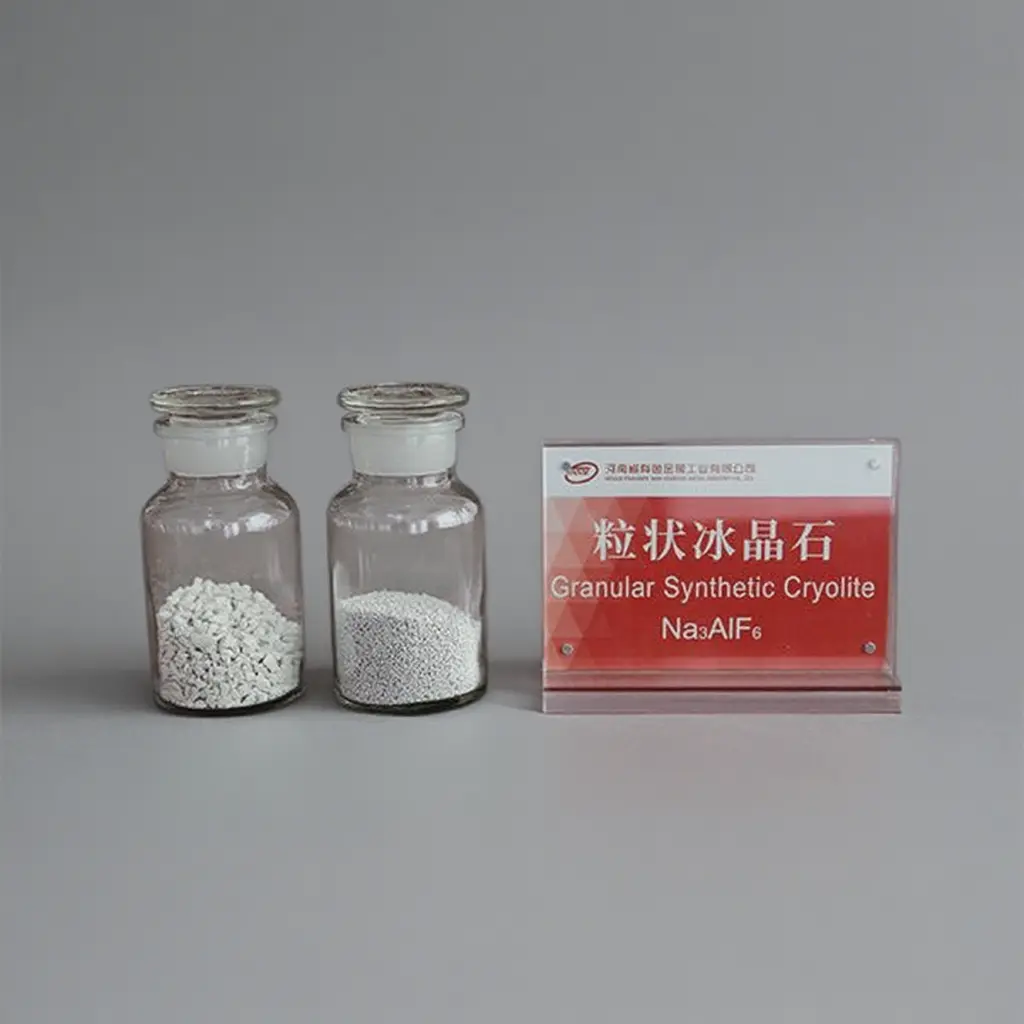
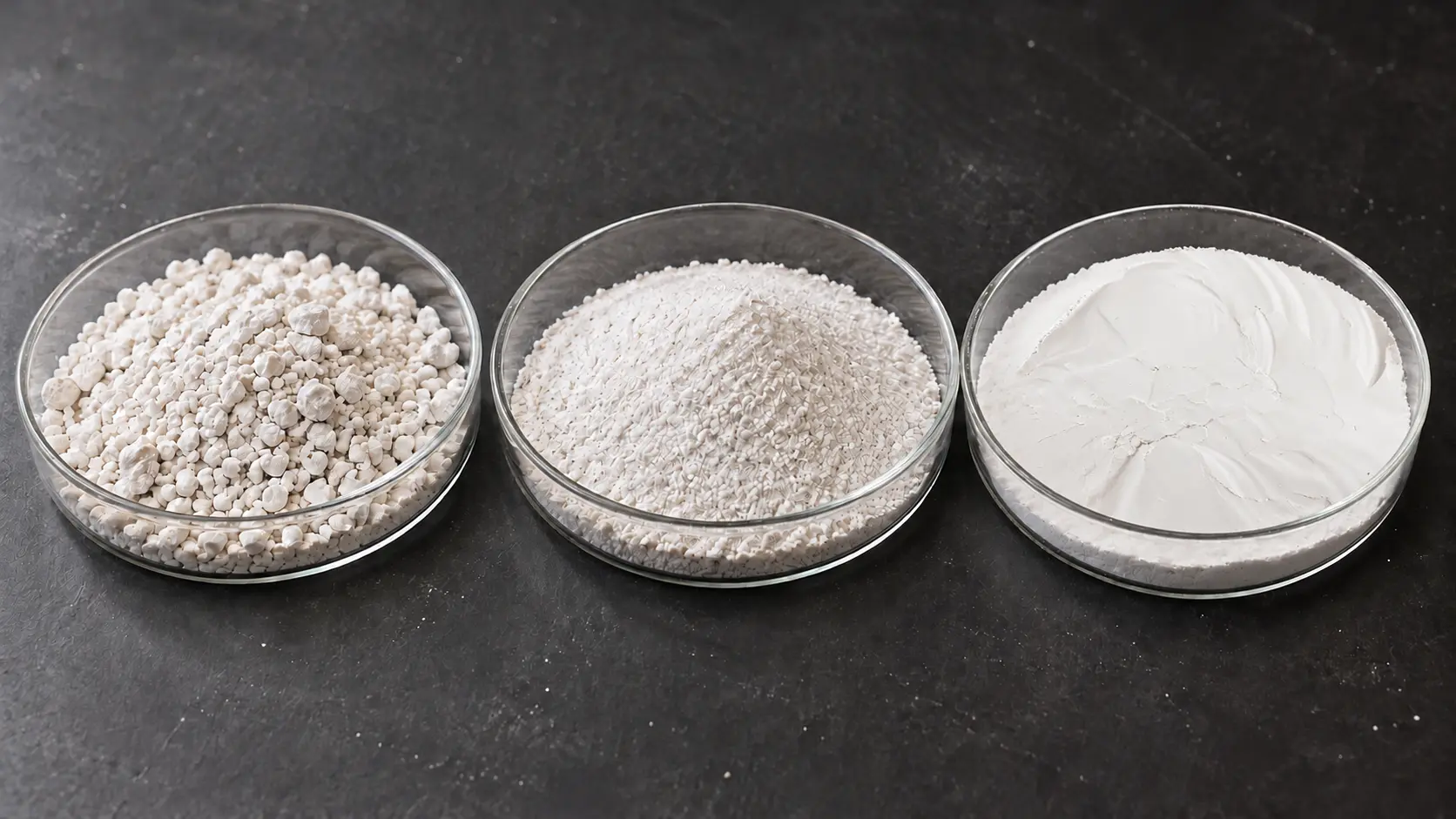
Cryolite particle size should match how the material is handled and processed. Aluminium smelters need grades suited to charging, flux producers need consistent blending, and abrasive manufacturers must consider dispersion and finished-tool performance. These differences determine which size limits belong in a purchasing specification.This article primarily analyzes particle size requirements and the evaluation of procurement specifications based on these common application scenarios.
Cryolite for Aluminium Smelting: Particle Size for Start-Up and Bath Additions
For potline start-up, select cryolite particle size around the charging route. Direct solid charging requires material that can be unloaded and distributed with acceptable dust generation. For premelting, size should suit the receiving equipment and melting schedule; larger particles are not automatically preferable.
HNNM’s granular cryolite specifications list 0–10 mm material with no more than 10% below 0.045 mm. This defines an overall range and fines limit, but not the proportions between them. If the charging plan requires a particular size fraction, buyers should specify its percentage separately.
For additions during normal operation, balance feeding consistency with incorporation into the bath. Oversized particles or lumps may obstruct restricted feed passages, while finer material may increase dust. A finer grade is worth considering where trials show improved incorporation under comparable bath conditions and addition quantities, without unacceptable handling losses.
Start-up and replenishment do not necessarily require different grades. Separate specifications are justified when their handling or charging requirements differ. For a detailed discussion, see cryolite particle size for aluminium smelting.
Cryolite in Aluminium Flux Blends: Matching Particle Size to the Process
In aluminium melt treatment, cryolite may be one ingredient in a formulated flux. Its incoming particle size and the finished flux’s delivery form are separate specifications. Foseco’s melt-treatment guidance describes powder and granular fluxes for different application arrangements; these forms do not establish a universal size for the cryolite ingredient.
For dry blending, the concern is whether cryolite mixes evenly with the other salts and remains distributed through packing, transport and discharge. A blend that appears uniform after mixing may separate during handling. Samples taken near the beginning, middle and end of discharge can be compared using a suitable composition test.
If the blend is subsequently granulated or fused, evaluate the incoming powder within that operation. The particle size required by the customer’s dosing equipment applies to the finished flux and should not automatically become the raw cryolite specification.
A useful trial follows the complete route from blending to final dosing. This helps buyers identify whether the incoming size needs adjustment or whether the problem arises during subsequent processing.
Cryolite Powder for Abrasives: Checking Mixing and Processing Suitability
Cryolite is used as an active filler in resin-bonded abrasives, a role identified in Solvay’s cryolite application information. Its particle size should suit that role rather than follow the abrasive grain designation.
Compare powder dispersion, persistent agglomerates, mix consistency and mould filling within the existing resin system and filler loading. Finer material may change dispersion, but changes in surface area can also affect binder demand and handling. Keep the formulation and mixing conditions unchanged when comparing grades.
HNNM’s published 400 mesh specification lists +200 mesh residue as 0% and −400 mesh passing as at least 80%. These describe the coarse residue and fine fraction respectively. Confirm the sieve apertures, test procedure and reporting precision when agreeing acceptance criteria.
Promising samples should proceed through forming, curing and finished-tool evaluation. Compare the required strength checks, grinding performance and wheel wear against the approved material. If trials link oversized particles to processing or product defects, agree a maximum residue on the relevant sieve. Additional distribution data is useful when it helps explain differences that the existing sieve limits do not capture.
Cryolite for Glass, Enamel and Frits: Choosing Particle Size for Further Processing
HNNM lists a 100 mesh grade for glass, enamel and frit applications, with at least 80% passing. Suitability depends on where cryolite enters the process: before melting, before milling or during final mixing.
Before melting, assess weighing, batch uniformity, dust loss and melting behaviour under the actual furnace cycle. Compare the resulting glass or frit against the required appearance and homogeneity. Keep chemistry, mixing and the thermal cycle comparable when assessing a size change.
Where the recipe includes cryolite in a milling stage, compare the time needed to reach the specified fineness, screen residue and the prepared mixture’s consistency. Ditmer’s wet-enamel preparation guidance describes milling followed by screening. Before paying for finer incoming powder, establish whether it reduces milling time or persistent residue enough to justify the cost. Final enamel fineness remains a separate process requirement.
With little or no further size reduction, incoming coarse particles and dispersion deserve closer attention. Compare the final mixture and fired product with the approved material. A grade that works in a process with extensive milling may need reassessment if that step is removed.
Turning Cryolite Application Trials into Purchasing Specifications
A small number of candidate parameters can be selected based on basic process requirements. Previous or current product specifications can be used as a reference, and the formulation, equipment settings, and sample identification should be documented for inspection and testing. Acceptable ranges should be determined based on the test results.
| Application | Trial evidence | Possible purchasing control |
| Aluminium electrolysis | Discharge, dust and bath incorporation | Overall size range and fines limit |
| Flux blending | Blend uniformity after handling; dosing | Ingredient size limits aligned with the blending route |
| Resin-bonded abrasives | Dispersion, forming and finished-tool performance | Coarse residue; distribution data where justified |
| Glass, enamel and frits | Melting or milling behaviour; finished quality | Incoming size limits suited to downstream processing |
Adjust the tolerance range and establish limit values based on issues identified during testing. For example, if coarse-particle retention persists, specify the corresponding sieve size and maximum retention; setting a D50 target alone will not resolve this issue. At the same time, agree upon sampling procedures, testing methods, and statistical principles. Before proceeding with bulk procurement, you can use a trial order to verify performance; however, please note that small laboratory samples cannot replicate all shipping and storage conditions.
Finally, specify acceptance criteria; the COA provides the testing basis for the corresponding batch, and the SDS supports safe handling. Application approval must be completed separately, and the approved specification version should be retained for subsequent repeat purchases.
FAQ
Can one cryolite grade serve several applications?
Yes, if each process has validated it. A shared chemical composition or mesh label does not establish equivalent performance across applications.
Should an aluminium smelter always choose granular cryolite?
No. Suitability depends on the charging route and equipment. Evaluate the selected form within the plant’s approved operating practice.
Is finer cryolite powder better for abrasive production?
Only if it improves the required processing or finished-tool performance. Compare mixing, forming and grinding results before tightening the size limit.
Is D50 necessary to approve a new grade?
Not always. Agreed sieve limits may be sufficient where trials show that they control the relevant processing requirements. D50 alone does not describe the coarse and fine fractions.
Discuss Your Application Requirements
HNNM, Henan Non-Ferrous Metals Industry Co., Ltd., is a wholly owned subsidiary of Duofuduo New Materials Co., Ltd. Contact our team with your application, current specification or sieve report, quantity and destination to discuss candidate grades, supporting documents and quotation options.