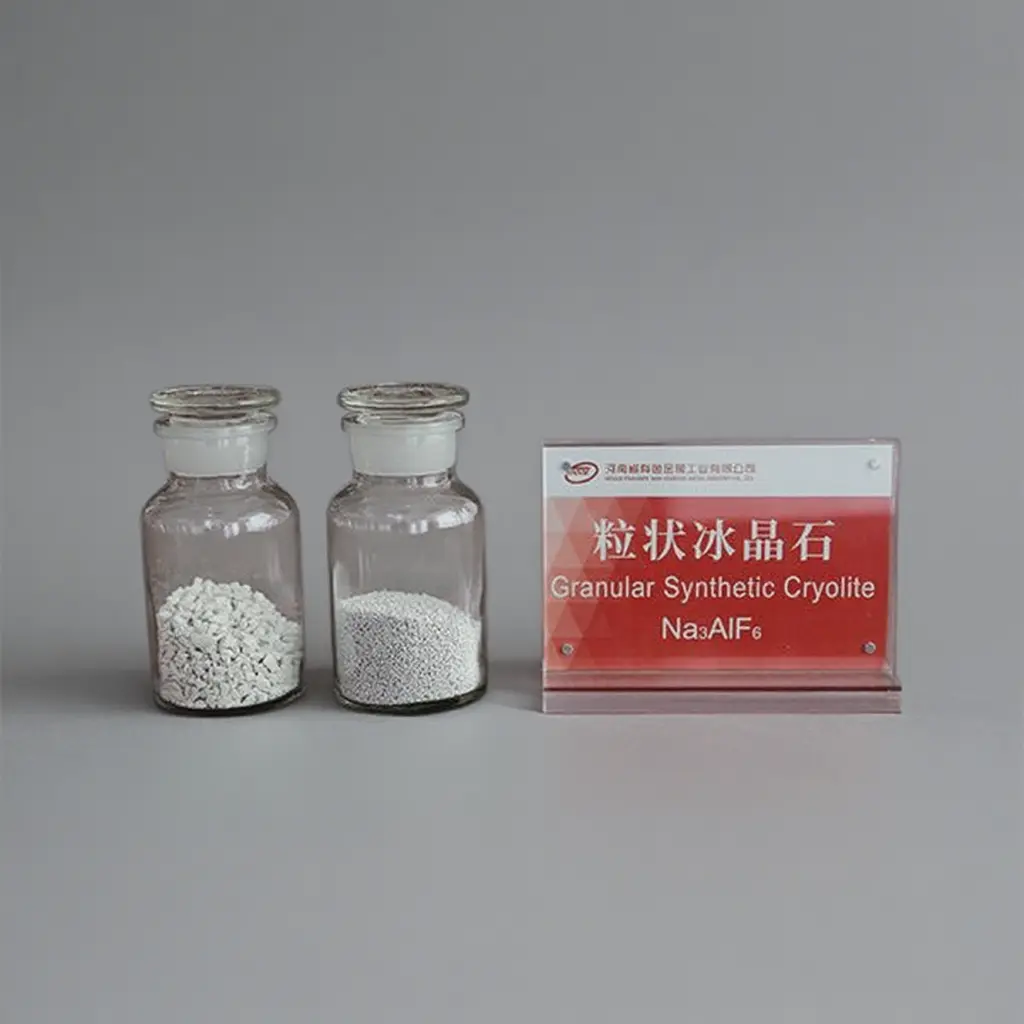
Cryolite particle size should be selected for the job it needs to perform. For aluminium smelter start-up, the specification should follow the approved charging procedure. For routine additions, it should match the plant’s unloading, conveying and dosing arrangements.
Maximum particle size, relevant size fractions and fines content should all be defined. A description such as “granular cryolite” or a mesh number alone does not provide enough information for purchasing and acceptance.
Start-Up Cryolite: Define Where and How It Will Be Used
A start-up enquiry should identify whether the cryolite will be placed during preheating or added to help establish the initial electrolyte. These duties may involve different requirements and should not automatically use the same particle-size specification.
For granular material, buyers should establish whether it can be distributed as required, whether fines are acceptable for the handling conditions, and whether moisture or hard lumps could interfere with charging. Melting behaviour should suit the start-up sequence; coarser particles and slower melting are not necessarily better.
An approved material specification or records from previous start-ups provide a practical reference when evaluating a proposed grade.
How to Read HNNM’s Granular Specification
HNNM’s published granular synthetic cryolite specifications include:
| Particle-size parameter | Published specification |
|---|---|
| Material within 0–10 mm | 100% |
| Material below 0.045 mm | 10% maximum |
| Other particle-size requirements | Subject to agreement |
These figures define the overall size range and fines limit. They do not describe the full distribution between those limits.
A 0–10 mm specification does not mean that most particles fall between 1 and 10 mm. Two batches may meet both the stated size range and fines limit while containing different proportions of intermediate and coarse particles.
If the charging procedure requires a minimum proportion within a particular size band, specify that proportion separately and request the corresponding sieve results.
Routine Additions: Match the Actual Handling Route
Alumina feeding, aluminium fluoride additions and cryolite replenishment serve different purposes and may use different equipment.
The European Commission’s aluminium production overview describes automatic feeders continuously supplying alumina. The presence of point feeders therefore does not establish how cryolite is handled or which particle size it requires.
For routine cryolite additions, review the route from unloading to entry into the bath:
- Unloading and conveying: Can particles and any lumps pass through the equipment? Is dust generation acceptable at transfer points?
- Storage: Does the packaging protect the material from moisture over the expected transport and storage period?
- Dosing: Does the material discharge consistently and suit the dosing method?
- Charging: Does its behaviour after addition meet the plant’s operating requirements?
For an operating smelter, sieve reports and handling records from an approved material give buyers a useful basis for comparing suppliers. They are more informative than descriptions such as “sandy” or “free-flowing” alone.
Make the Fines Limit Measurable
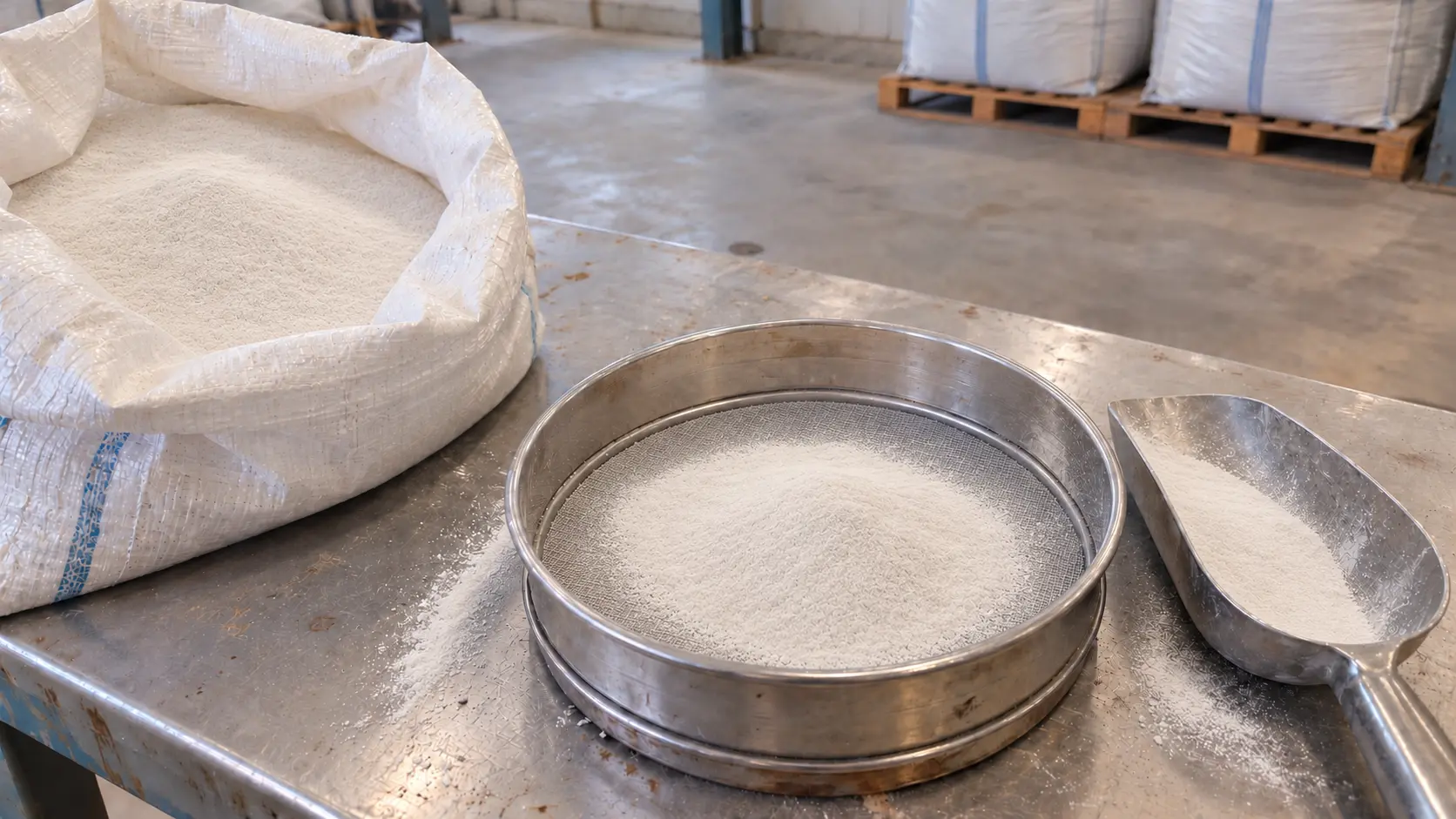
“Low dust” expresses a purchasing objective, but it is not an acceptance criterion. Specify the maximum mass percentage below a defined particle size, together with the sampling and sieve test method.
Fines carryover and gaseous fluoride emissions are different issues. The US EPA’s primary aluminium production technical document treats particulate and gaseous fluorides separately. Particle size alone should therefore not be used to predict total fluoride losses.
When changing between powder and granular products, review conveying, dosing and charging performance even if the chemical specifications are similar. Passing a chemical analysis does not establish that different physical forms are interchangeable in the same equipment.
Check Chemical Composition Separately
Particle size and chemical composition require separate checks. Granular form does not establish a particular cryolite ratio. When comparing NaF/AlF₃ values, confirm whether the specification uses a mass ratio or a molar ratio. HNNM’s granular product table lists 1.35–1.55 by weight, which must not be compared directly with a molar-ratio requirement. The supplied material’s composition should also be reviewed against the plant’s electrolyte formulation.
Agree on Acceptance Requirements Before Ordering
GB/T 4291–2017, Synthetic Cryolite, is currently listed as an active Chinese national standard. Where it forms part of the purchase agreement, identify the edition and add the project-specific requirements.
| Purchasing item | Information to specify |
|---|---|
| Intended use | Preheating placement, start-up charging or routine additions |
| Handling conditions | Unloading, conveying and dosing arrangements |
| Particle-size distribution | Maximum size, relevant size fractions and fines limit |
| Quality requirements | Ratio basis, moisture, impurity limits and lump acceptance criteria |
| Inspection | Sampling procedure, sieve test method and required batch results |
| Delivery | Packaging, quantity and required arrival dates |
If mesh terminology is used, state the sieve aperture and the required passing or retained percentage. For an explanation of these terms, see our article on cryolite particle size distribution: understanding mesh sizes and specifications.
Agreeing on the inspection method before ordering allows supplier results and incoming inspection results to be compared on the same basis.
Discuss Your Cryolite Requirements with HNNM
HNNM supplies synthetic cryolite and supports overseas buyers with specification review, technical documentation and export delivery coordination.
For a start-up project or supplier change, send the intended application, current specification or sieve report, estimated quantity and delivery schedule. These details help establish a suitable supply specification and measurable batch acceptance requirements.