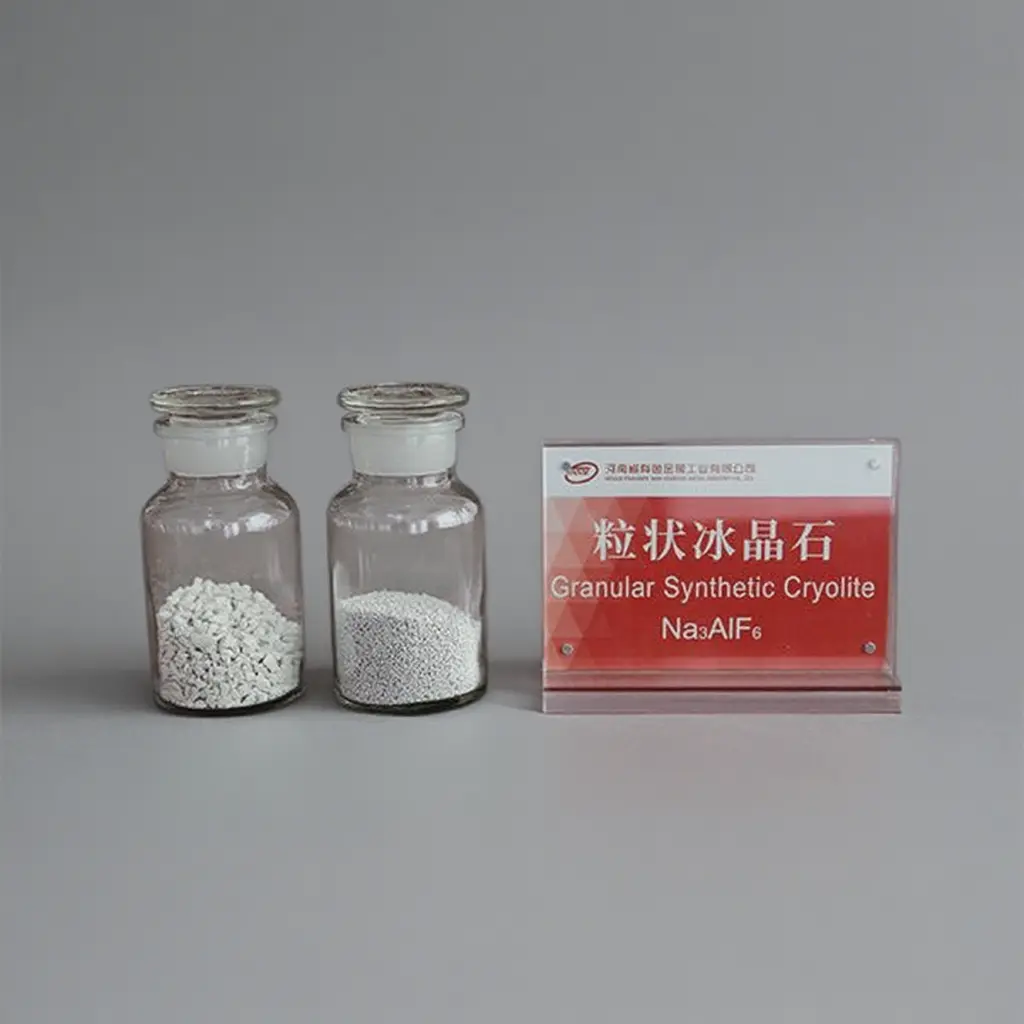
The particle size distribution of cryolite affects material handling, feeding, and incoming material inspection. When purchasing, it is not enough to simply look at the “100 mesh” rating; the mesh size, pass rate, and testing methods collectively determine the meaning of the specification. For applications such as aluminum smelters, this set of indicators is inextricably linked to actual performance in the field.
What Is Cryolite Particle Size Distribution, and Why Control It?
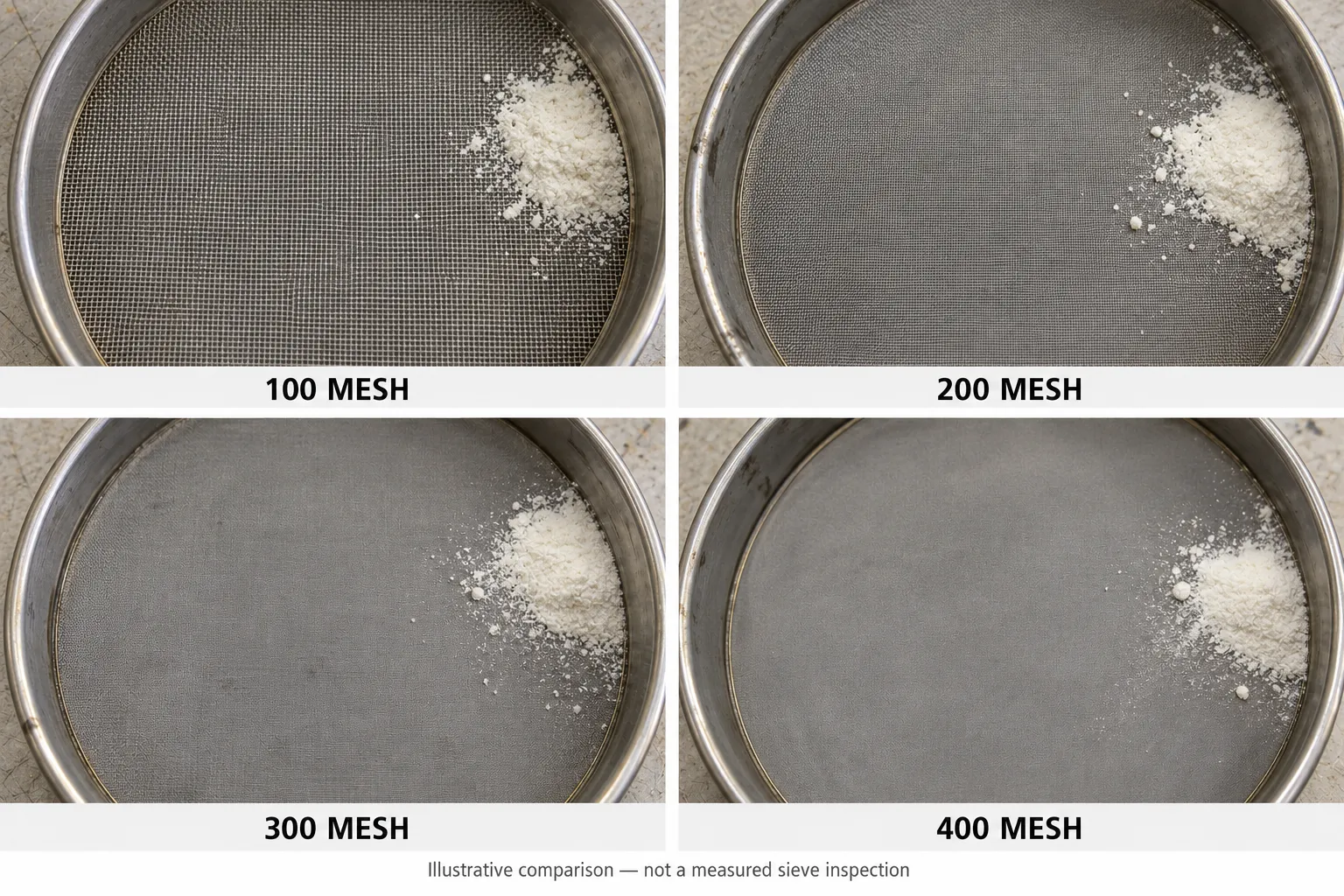
Particle size distribution describes the proportion of particles within different size ranges. Common measurement results can be reported by mass, volume, or count; these three should not be conflated.
Even among batches with identical chemical compositions, the proportion of coarse and fine particles may vary, which in turn affects material handling and processing performance; moisture content, particle shape, and equipment conditions also play a role.
Specific numerical results correspond to specific issues; for example, using a fine-particle limit to control the proportion of fine particles during transshipment, or using a coarse-particle limit to meet mixing requirements, are all integral parts of the production control process.
Understanding Cryolite Powder Mesh Size, Passing Percentage and Sieve Residue
Mesh identifies a sieve designation. Specify the aperture in micrometres or millimetres and the applicable sieve standard, such as ASTM E11 standard published by ASTM International, which defines requirements for test sieves.
In sieve notation, “−” means passing and “+” means retained. A complete specification includes the percentage and its minimum or maximum limit.
HNNM’s 100 mesh entry specifies at least 80% passing, with 83% listed as a typical value. The label does not mean all particles pass the sieve, and the typical value is not a guaranteed minimum.
| Figure | Purchasing meaning |
| Specification limit | Agreed acceptance boundary |
| Typical value | Reference unless explicitly guaranteed |
| Batch result | Measurement for the identified batch |
The granular entry specifies 0–10 mm and no more than 10% below 0.045 mm. The first describes the size range; the second controls fines within it. These limits apply to those product entries, not all cryolite grades.
Cryolite Sieving and Laser Diffraction: Mesh Size vs. D50
Sieving and laser diffraction are test methods. Mesh identifies a sieve; D50 describes a distribution percentile.
| Aspect | Sieving | Laser diffraction |
| Measurement | Passage through sieve apertures | Particle light scattering |
| Common output | Mass passing or retained | Volume distribution and percentiles |
| Main question | Does the sample meet the sieve limit? | How is particle volume distributed by size? |
For volume-based laser results, Dv50 is the size below which 50% of particle volume falls. It is the median. Dv10 and Dv90 mark the 10% and 90% points; Dv90 is not the maximum size. Similar Dv50 values can conceal different fine and coarse fractions.
A mesh opening cannot be converted directly into D50. Particle shape and measurement principles produce differences, as Malvern Panalytical’s method comparison explains.
Sampling and dispersion also affect results. Laboratory preparation may break up loose agglomerates present in delivered material. Agree the preparation conditions before comparing reports; see Malvern Panalytical’s guidance.
A sieve-based COA can be sufficient without D50. Request additional distribution data when the existing test leaves a process question unanswered, and validate any change to the acceptance method.
How Cryolite Particle Size Affects Unloading, Conveying and Feeding
For aluminium smelting, assess cryolite along the plant’s actual handling route. Start-up and later bath additions follow plant-specific procedures; routine alumina feeding is not a substitute reference. See the potline start-up procurement guide for that application.
Bag opening and transfer. Fine particles can become airborne during emptying. The supplied safety information calls for dust control and closed packaging. During trials, record dust escape, bag residue and cleanup time per tonne. These indicate material losses and handling costs; compare drop height and enclosure conditions too.
Storage and hopper discharge. Moisture, agglomeration and hopper geometry affect discharge alongside particle size. Record interruptions, manual clearing and residual material to identify the costs of poor flow.
Metering and addition. Bulk density includes the voids between particles. With volumetric feeding, a density change alters the mass delivered at the same setting. Compare particle size, bulk density and dosing results together.
Entry into the bath. Finer material must be assessed against handling losses as well as its behaviour in the electrolyte. Bath temperature, composition and addition practice also matter. Claims of lower electricity use require plant evidence.
Which Cryolite Particle Size Specifications Should Buyers Confirm?
Define the application, delivery form and handling route before requesting a quotation. Specify the aperture or size range, passing or retained limits, reporting basis and test method. Add percentiles where they serve a clear control purpose.
Confirm guaranteed limits and batch reporting with the supplier. If requirements are not yet validated, compare samples against accepted material and use trial results to set limits.
The agreed purchasing specification governs acceptance; the COA reports batch results, while safety information supports handling. Retain the approved sample identity and test conditions for later comparisons.
Frequently Asked Questions
Can two 325 mesh products be treated as equivalent?
Only after comparing aperture, sieve standard, passing percentage and test method, together with chemical requirements and intended use.
Does a higher passing percentage always mean better quality?
No. It means more material passed that sieve. Its value depends on the plant’s process requirements.
Should every cryolite order require D50?
No. An established sieve requirement may be sufficient. Request D50 when it supports a specific selection or control decision.
What should happen when a result differs from the COA?
Confirm batch identity, sampling and method comparability, then follow the agreed retesting procedure.
Discuss Your Cryolite Specification
HNNM, Henan Non-Ferrous Metals Industry Co., Ltd., is a wholly owned subsidiary of Duofuduo New Materials Co., Ltd. View our synthetic cryolite grades or send your application, specifications, quantity and destination to discuss supply and documentation.