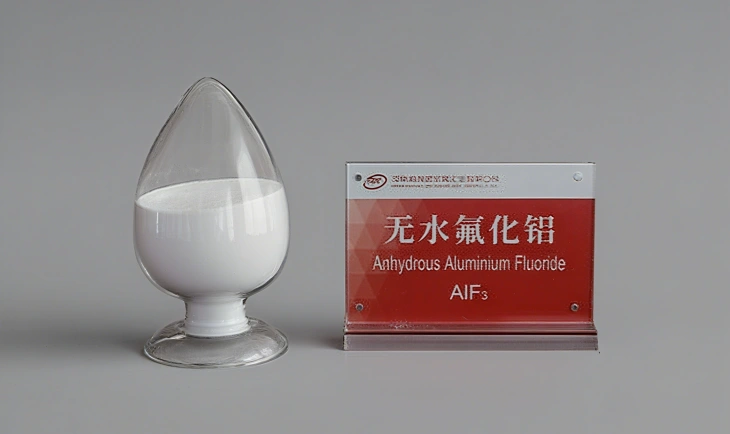
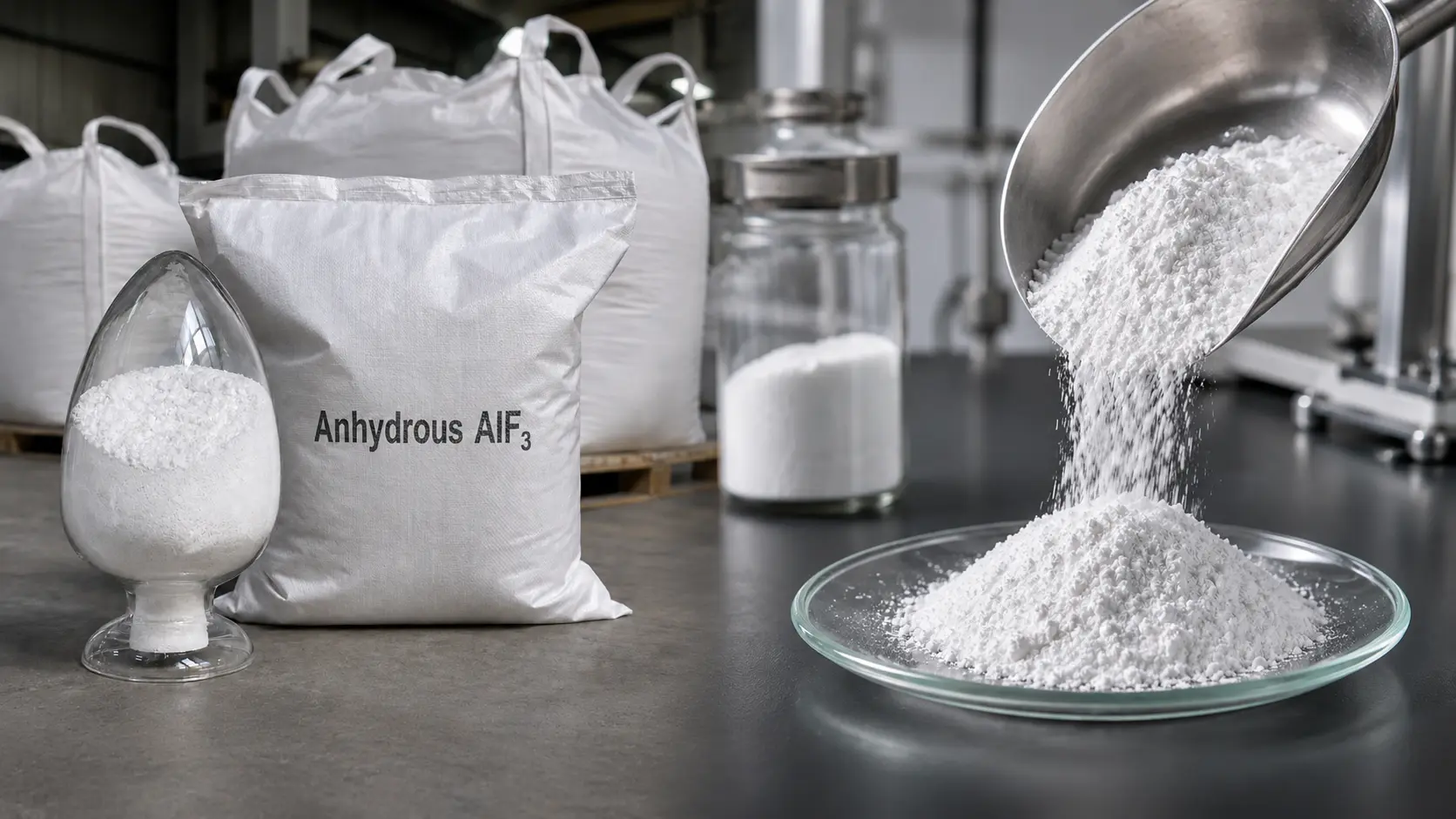
Aluminum fluoride (AlF₃) is a core fluorine-bearing raw material in aluminum smelting, with industrial characteristics that differ fundamentally from those of general chemical commodities. In the aluminum electrolysis process, each addition of aluminum fluoride constitutes an active intervention in the chemical equilibrium of the electrolyte system — its quality directly governs bath stability and process control precision.
The Role of Aluminum Fluoride in the Aluminum Electrolysis Electrolyte System
Molecular Ratio and Process Risks
Aluminum electrolysis relies on a cryolite (Na₃AlF₆)-based molten salt system. The central control parameter is the electrolyte molecular ratio — the molar ratio of NaF to AlF₃. Industrial aluminum electrolysis cells typically maintain this ratio within the range of 2.2 to 2.6. Deviation in either direction introduces distinct process risks:
- Molecular ratio too high: The liquidus temperature rises, requiring correspondingly higher bath temperatures, which increases energy consumption and accelerates lining erosion.
- Molecular ratio too low: The corrosiveness of the electrolyte toward the cell lining increases; although the liquidus temperature decreases — which is favorable for energy efficiency — tighter control over alumina feeding is required, and the operating window narrows.
AlF₃ Loss Mechanisms and the Logic of Supplemental Addition
During electrolysis, AlF₃ is continuously lost through volatilization and hydrolysis, necessitating regular replenishment to maintain a stable molecular ratio. The calculated addition quantity is based on two inputs: the current molecular ratio of the electrolyte and the effective AlF₃ content of the incoming material. Fluctuation in either variable compromises the accuracy. This is the fundamental attribute that distinguishes aluminum fluoride from ordinary industrial raw materials — it participates in a dynamic control system that is highly sensitive to compositional change.
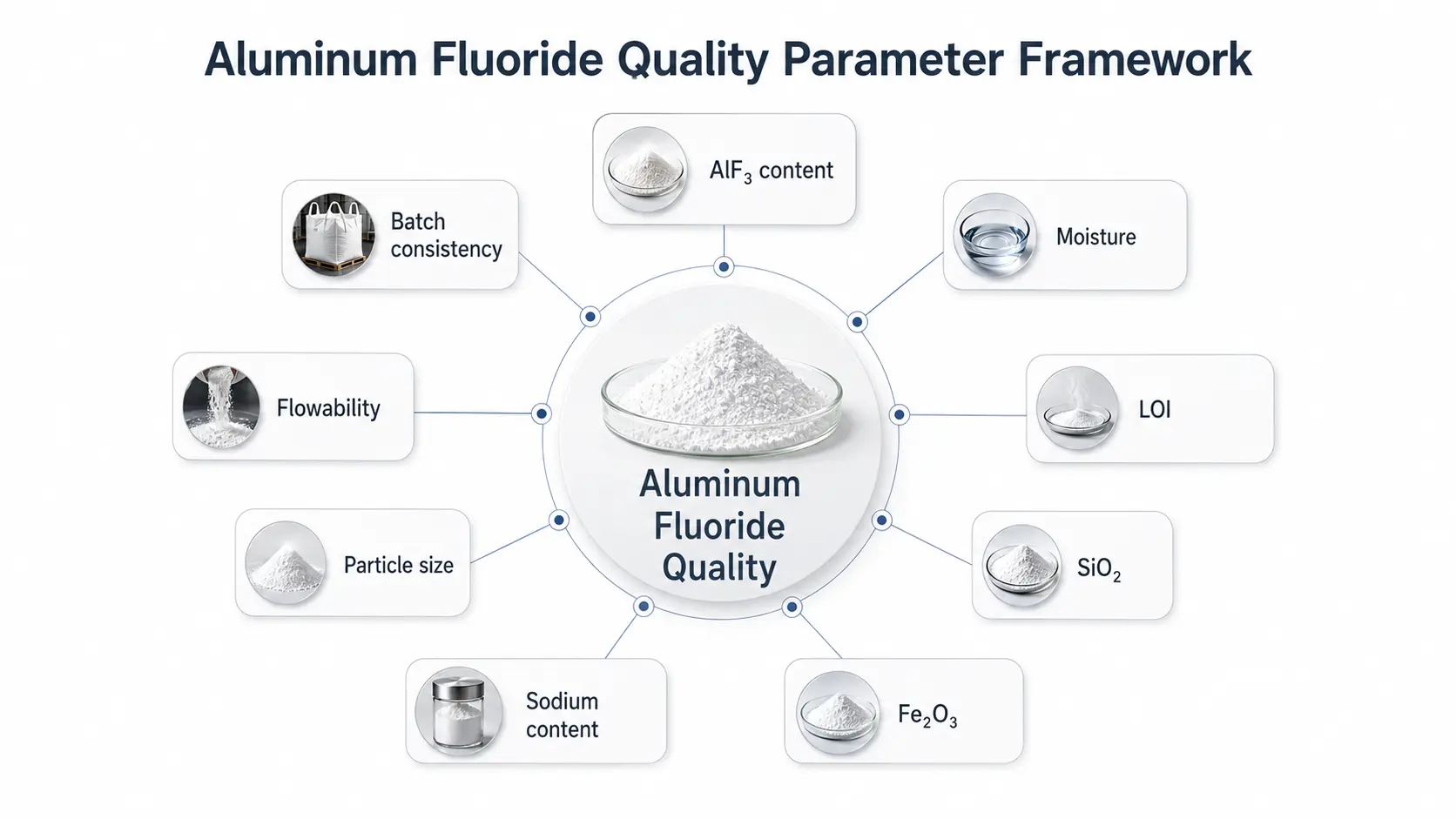
The Quality Parameter Framework That Determines Industrial Value
Moisture
Elevated moisture affects two critical areas. First, it reduces weighing accuracy, causing the actual quantity of AlF₃ entering the system to deviate from the planned value. Second, it compromises product stability: during storage, AlF₃ readily forms hydrates, impairing flowability and feeding consistency. Once introduced into the high-temperature electrolyte, moisture reacts with AlF₃ to produce Al₂O₃ and HF — depleting effective material while generating fluorine-containing off-gases that increase the burden on exhaust gas treatment systems.
Loss on Ignition (LOI)
Loss on ignition is not equivalent to moisture content. LOI represents the total mass loss of all thermally unstable components in the product, including adsorbed water, crystal water, and decomposition products of certain fluorine-containing compounds. It is important to note that LOI values are directly influenced by the test temperature, and different standards specify different conditions. Suppliers and buyers must confirm the test method used to ensure comparability of data. Elevated LOI indicates that the actual usable proportion of effective material falls below the stated main content value, with direct implications for addition accuracy and cost accounting.
Critical Impurities
In aluminum electrolysis applications, the impurities of concern are those with clearly defined impact pathways:
- SiO₂: Reduced to silicon in the high-temperature electrolyte, it enters the aluminum melt directly and is a primary source of silicon content exceeding specification limits. SiO₂ also reacts with NaF in the electrolyte to form Na₂SiF₆, consuming available fluorine and disrupting the molecular ratio balance.
- Fe₂O₃: Iron migrates from the electrolyte into the aluminum melt and is one of the principal impurity sources responsible for degrading aluminum product grade, with a particularly significant impact on the production of high-purity aluminum.
- Sodium content: Sodium present in aluminum fluoride — in the form of NaF or other sodium compounds — contributes directly to the NaF component of the electrolyte, altering the effective molecular ratio. When sodium content is elevated, and the addition model does not account for this contribution, the molecular ratio will be systematically biased upward. The acceptable range for this parameter should be explicitly defined in the procurement specification.
Beyond the absolute values of individual batches, the magnitude of inter-batch variation is the more critical evaluation dimension. A supplier whose output shows stable, narrow variation offers greater process predictability than one whose individual batch results are strong but inconsistent.
Particle Size and Flowability
Particle size distribution directly affects the performance of feeding systems. Excessively fine material increases dust loss and weighing error; uneven distribution leads to inconsistent feed rates, causing the effective quantity of AlF₃ entering the system per unit time to fluctuate. For smelters equipped with automated feeding systems, poor flowability can cause material bridging and blockages in feed hoppers, disrupting production continuity.
Batch Consistency as a Core Criterion for Long-Term Supplier Relationships
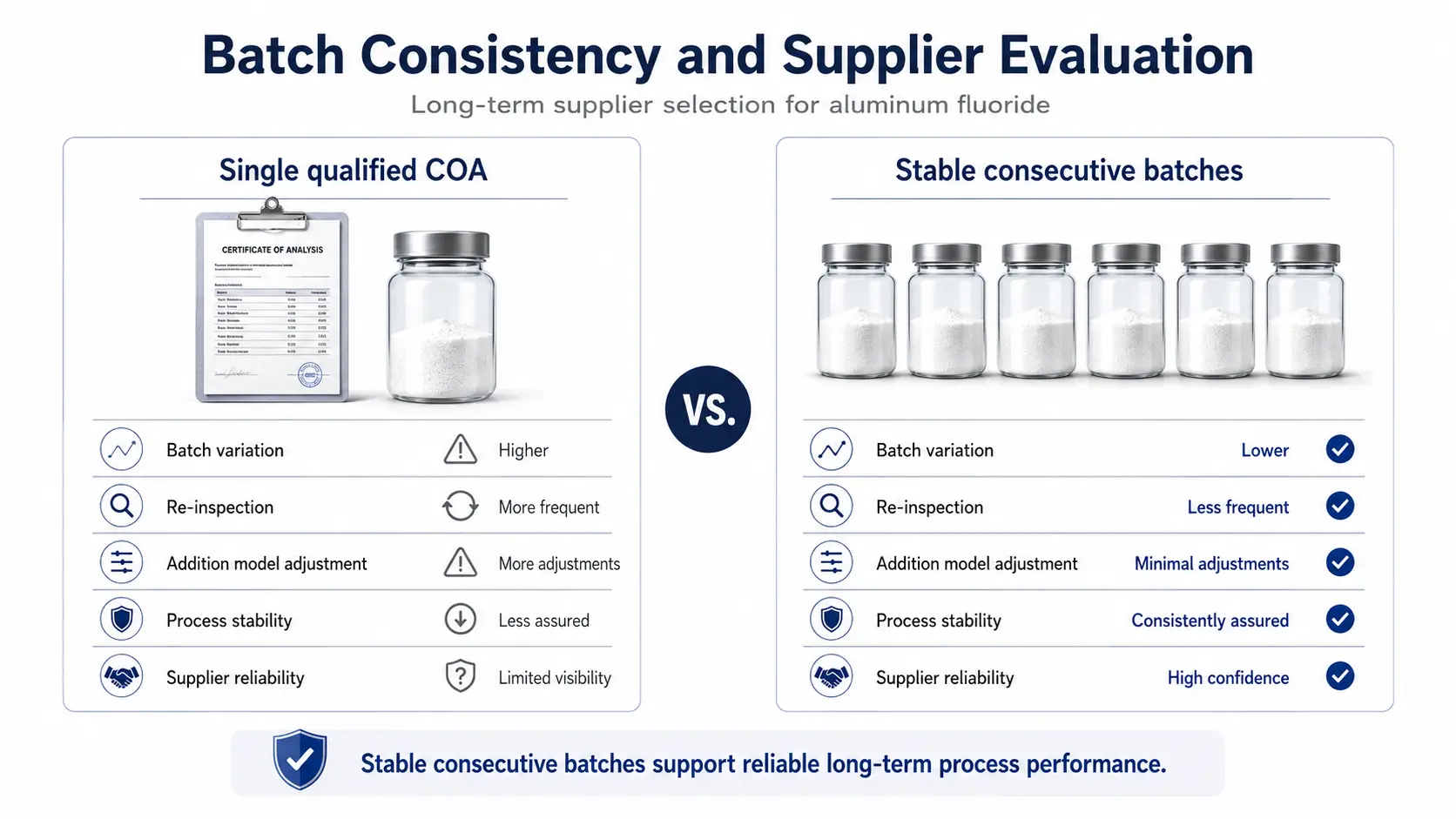
The Real Cost of Variability
A single passing inspection result does not equate to supply stability. Aluminum electrolysis is a continuous process, and process engineers build additional models based on the historical performance of incoming materials. When moisture content, effective content, or particle size deviates significantly between batches, parameters must be recalibrated — generating re-inspection costs, adjustment lead time, and the risk of bath instability during the correction period.
Three Areas to Examine When Evaluating a Supplier
When assessing a supplier’s long-term value, the following should be prioritized:
- The variation range of key parameters across consecutive batches, rather than peak values from individual batches.
- Whether moisture-barrier packaging and transportation controls are genuinely effective, there is a meaningful gap between the condition at dispatch and the condition upon arrival.
- Records of how abnormal batches have been handled and the responsiveness of the supplier’s quality management system.
A supplier’s demonstrated capability in managing non-conforming events is often a more reliable indicator of quality system maturity than an unblemished delivery history.
The Nodal Value of Aluminum Fluoride in the Fluorochemical Industry Chain
Aluminum fluoride occupies a midstream conversion node in the fluorochemical industry chain. Fluorspar (CaF₂) is reacted with sulfuric acid to produce hydrofluoric acid (HF), which then reacts with aluminum hydroxide to yield AlF₃. The grade and impurity profile of upstream raw materials set the ceiling on product purity; reaction control, drying process management, and screening operations during production determine batch-to-batch consistency in AlF₃ content, moisture, and particle size; and the integrity of finished product packaging and storage conditions governs how closely the delivered material reflects the Certificate of Analysis (COA) issued at dispatch.
A COA captures product status at a specific point in time and cannot substitute for a systematic evaluation of full-process quality management capability.
Practical Dimensions for Supplier Evaluation
For procurement decision-makers at aluminum smelters, the following points merit clarification during the inquiry stage:
- Continuity of historical batch data: Request key parameter records for 3 to 6 consecutive batches and focus on variation trends rather than individual data points.
- Consistency of test method definitions: Moisture and LOI results are sensitive to test conditions; confirm that supplier and buyer are referencing the same analytical standards.
- Packaging and transportation specifications: Moisture-barrier packaging standards and transport conditions are key factors in assessing the risk of deviation between delivered and certified quality;
- Non-conformance handling procedures: Establish in advance the process for responsibility attribution and resolution when delivered test results diverge from the COA.
The answers to these questions provide a more effective basis for evaluating a supplier’s actual supply capability than a single-round price comparison.
FAQ
1. What is aluminum fluoride?
Aluminum fluoride, also known as AlF₃, is a fluorine-bearing industrial material mainly used in aluminum smelting and related fluorochemical applications. In aluminum electrolysis, it helps adjust the electrolyte system and supports stable bath operation.
2. Why is aluminum fluoride important in aluminum electrolysis?
Aluminum fluoride helps control the molecular ratio of the cryolite-based electrolyte system. This affects bath temperature, electrolyte stability, alumina feeding control, energy consumption, and lining protection during aluminum smelting.
3. Which aluminum fluoride quality parameters should buyers pay attention to?
Buyers should focus on AlF₃ content, moisture, loss on ignition, SiO₂, Fe₂O₃, sodium content, particle size, and batch consistency. These parameters may influence feeding accuracy, electrolyte balance, aluminum purity, and long-term process stability.
4. How does aluminum fluoride fit into the fluorochemical industry chain?
Aluminum fluoride is an important midstream product in the fluorochemical industry chain. It is commonly produced from fluorspar-derived hydrofluoric acid and then used in downstream aluminum electrolysis, linking upstream fluorine resources with aluminum smelting applications.
CTA
For further information on product specifications or to initiate a supplier qualification process, please contact us for detailed technical documentation and product samples.