A Market and Application Perspective Based on the New Energy Battery Technology Pathway Within the DFD Group System
On April 10, at the 2026 (2nd) Qidian Lithium Battery Cylindrical Battery Technology Forum and Cylindrical Battery Top 20 Ranking Release Event held in Shenzhen, a new energy battery technology representative from the DFD Group system delivered a thematic presentation on the application innovation of large cylindrical batteries in electric two-wheelers and three-wheelers.

From a market trend perspective, electric two-wheelers and three-wheelers are entering a critical stage of accelerated transition from lead-acid batteries to lithium batteries. The key evaluation dimensions are becoming more practical and application-oriented:
- Safety performance
- Lightweight design
- Cycle life
- Full life-cycle cost
- Large-scale application feasibility
As an overseas market and supply service window within the DFD Group system, HNNM pays close attention to the technological progress of the group’s new energy battery business in small power mobility scenarios.
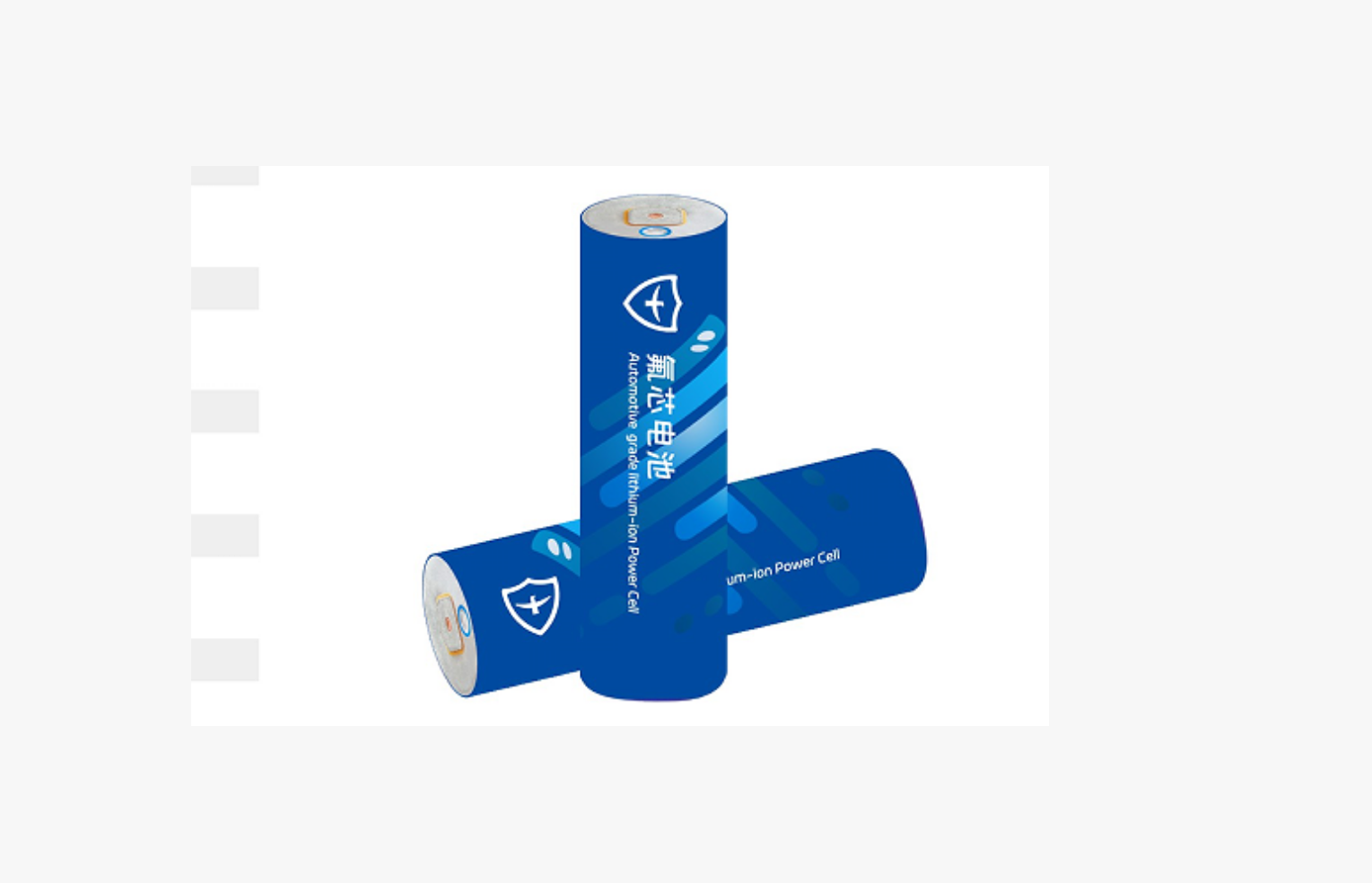
This article focuses on fluorine-based full-tab large cylindrical batteries and reviews the topic from four aspects:
- Market changes
- Technical pathway
- System safety
- Value for overseas customers
1. Market Restructuring: Electric Two-Wheelers and Three-Wheelers Enter an Accelerated Lead-Acid-to-Lithium Transition Phase
Over the past decade, the global electric two-wheeler and three-wheeler market has maintained rapid growth. According to market data disclosed in the forum presentation, from 2015 to 2025, global electric two-wheeler sales increased from approximately 12 million units to about 60 million units, while electric three-wheeler sales also achieved several-fold growth.
The main market characteristics include:
- The Asia-Pacific region remains the main global market for electric two-wheelers and three-wheelers.
- China and India continue to serve as important growth engines.
- Market growth is shifting from pure sales expansion to power system upgrades.
- Commuting, instant delivery, urban and rural short-distance transportation, and low-speed mobility scenarios are expanding.
- Vehicles are placing higher requirements on battery weight, safety performance, endurance stability, and operating cost.
Against this background, the lead-acid-to-lithium transition is no longer merely a material replacement. It represents a systematic upgrade of electric two-wheeler and three-wheeler product structures, user experience, and after-sales models.
For overseas markets, the key question is whether lithium battery solutions can balance safety and economic feasibility. This will directly affect their adoption speed in two-wheeler and three-wheeler mobility applications.
2. Core Challenge: Safety and Cost Determine the Pace of Lithium Battery Replacement
Electric two-wheelers and three-wheelers are high-frequency use scenarios. Their operating environments are complex, and charging conditions can vary significantly. Therefore, battery products should not only focus on capacity and range.
They should also place strong emphasis on:
- Thermal safety
- Structural stability
- Cycle life
- After-sales risk
- Scalable supply capability
Based on the comparative data presented at the forum, lithium batteries show clear advantages in energy density, weight, cycle life, and full life-cycle cost. Taking a 48V20Ah battery pack as an example, a lithium battery solution can usually be significantly lighter than a lead-acid solution, while also offering advantages in cycle count and warranty period.
However, for electric two-wheeler and three-wheeler applications, lithium battery replacement does not depend only on being lighter or offering a longer range. The real key is to form a balance among:
- Safety boundaries
- Acceptable cost
- Long-term service life
- Scalable supply
- Application adaptability
The technical value of fluorine-based full-tab large cylindrical batteries is developed around this core challenge.
3. Technical Pathway: Full-Tab Large Cylindrical Batteries Improve the Safety Boundary of Cells
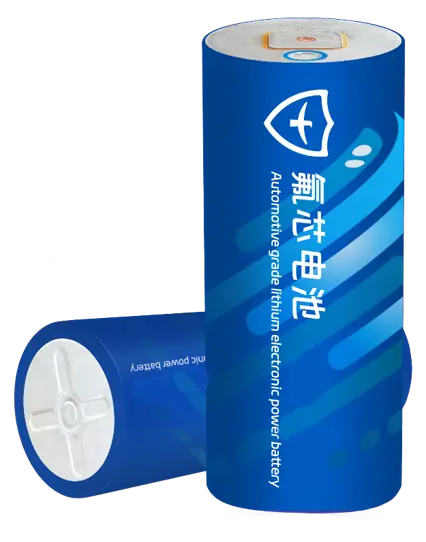
The key value of large cylindrical batteries lies in improving cell consistency, safety, and rate performance through structural design and manufacturing process optimisation. The full-tab structure can shorten the current transmission path, reduce internal resistance, and lower heat generation.
This provides a technical foundation for:
- Frequent start-stop operation
- Continuous riding
- Complex road conditions
- Stable power output
- Better thermal performance
At the cell level, the combination of bidirectional pressure relief structure, high-safety separator, and full-tab design helps improve pressure release capability and thermal safety management under abnormal conditions. When abnormal internal pressure occurs inside the cell, a reasonable pressure relief design can help reduce the risk of thermal runaway propagation.
At the process level, the transition from pulsed laser welding to continuous laser welding, together with more efficient connection structure design, helps improve:
- Manufacturing efficiency
- Cell consistency
- Batch stability
- Long-term performance
- After-sales reliability
For large-scale application markets such as electric two-wheelers and three-wheelers, process stability is directly related to batch consistency, after-sales risk, and long-term use performance.
4. System Protection: Extending Safety from the Cell Level to the Battery Pack Level
The safety evaluation of electric two-wheeler and three-wheeler batteries cannot remain only at the single-cell level. In actual use, the battery pack must also face multiple working conditions.
These may include:
- Vibration
- Water exposure
- External impact
- Overcharge
- Short circuit
- High-temperature environments
Therefore, system-level protection capability is equally important.
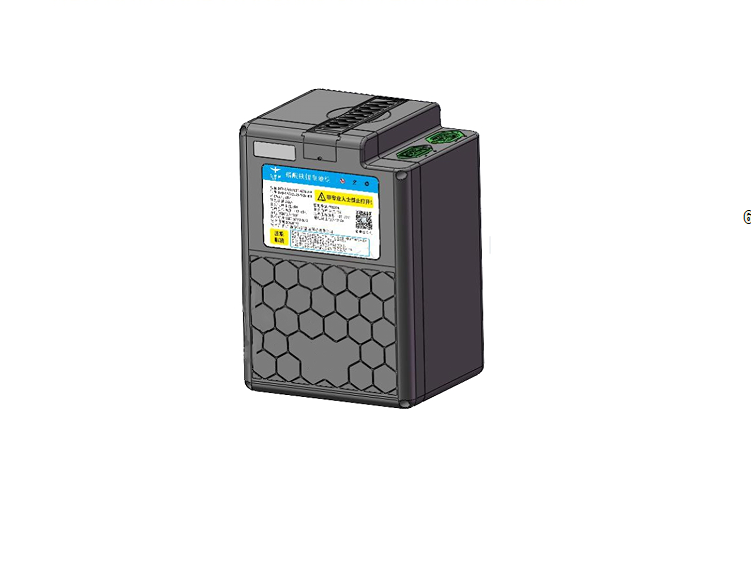
In system design, several structures can help improve the battery pack’s safety response capability under abnormal conditions:
- Smoke exhaust channels
- Independent isolation of battery units
- Metal enclosures
- Waterproof breathable valves
- Multi-layer thermal propagation control
Through multi-layer protection design from cells to the system, thermal propagation risks can be better controlled, and overall pack safety can be improved.
For vehicle manufacturers, channel customers, and end users, the significance of this type of design is not only reflected in improved technical parameters. It is also related to:
- Product compliance
- After-sales stability
- Brand trust
- User safety
- Procurement confidence
Especially in overseas markets, different countries and regions have different requirements for battery safety, transportation, certification, and use environments. System-level safety design will become an important factor in procurement evaluation.
5. Industrial Synergy: The DFD Group System Supports the Development of the New Energy Battery Ecosystem
Competition in new energy batteries is not only competition in a single cell technology. It is also a comprehensive competition involving materials, manufacturing, system design, and supply chain coordination.
The DFD Group system has formed an industrial foundation in:
- Fluorine-based new materials
- New energy materials
- New energy batteries
- Battery-related supply chain resources
- Application-side support
This foundation provides support for battery product technology iteration and application expansion.
For small power lithium battery applications, coordination among the materials side, cell side, and system side helps improve:
- Product development efficiency
- Supply stability
- Specification communication
- Application matching
- Quality consistency
- Long-term supply support
For overseas customers, the value of this industrial synergy is mainly reflected in specification communication, application matching, quality stability, and long-term supply support.
It should be noted that information involving specific production capacity, shipment volume, base planning, customer cases, and patent numbers should be based on content that has been publicly disclosed and properly authorised.
Website content is more suitable for highlighting the logic of industrial synergy and customer application value, rather than directly using unconfirmed internal operating data.
6. HNNM Perspective: Product Communication and Supply Coordination for Overseas Customers
As an overseas market and supply service window within the DFD Group system, HNNM does not present itself as the direct manufacturer of all battery products. Instead, based on the group’s new energy battery business resources, HNNM provides overseas customers with product information communication, specification confirmation, application scenario matching, and export coordination support.
For overseas customers focusing on electric two-wheelers, electric three-wheelers, portable energy storage, residential energy storage, and other small power applications, HNNM can assist customers in understanding:
- Performance differences between battery solutions
- Application boundaries
- Procurement considerations
- Specification requirements
- Export coordination needs
- Long-term cooperation possibilities
HNNM can also help promote subsequent technical and commercial communication.
In the long term, the significance of fluorine-based full-tab large cylindrical batteries is not only to provide a new cell format. It is also to help electric two-wheeler and three-wheeler mobility find a more sustainable balance among:
- Safety
- Cost
- Service life
- Application matching
- Supply stability
Conclusion
The electric two-wheeler and three-wheeler market is moving from scale growth toward quality upgrading. Under the lead-acid-to-lithium transition trend, a truly competitive battery solution needs to answer five questions at the same time:
- Is it safe enough for high-frequency use?
- Is the cost acceptable for large-scale adoption?
- Is the service life stable enough?
- Can it match different application scenarios?
- Can the supply remain stable over the long term?
Relying on the industrial foundation of the DFD Group system in new materials and new energy batteries, the fluorine-based full-tab large cylindrical battery technology pathway provides a new solution perspective for electric two-wheeler and three-wheeler mobility scenarios.
HNNM will continue to serve as an overseas market service window, providing clearer cooperation support for global customers around:
- Product information communication
- Specification confirmation
- Application matching
- Export coordination
- Supply coordination
CTA | Cooperation Inquiry for Overseas Customers
If you are evaluating new energy battery products for electric two-wheelers, electric three-wheelers, or small power application scenarios, you are welcome to contact HNNM.
Based on relevant new energy battery business resources within the DFD Group system, we can assist with:
- Product information communication
- Specification confirmation
- Application matching
- Export coordination
- Long-term cooperative connection