For an industrial buyer, the quoted fluorspar price is only the final number. The more important question is what makes up that number.
Two suppliers may both quote acid-grade fluorspar with CaF₂ ≥97%, yet their prices can still differ because of ore quality, beneficiation requirements, SiO₂ and CaCO₃ limits, moisture, particle size, product form, batch consistency, market conditions and delivery terms.
A practical way to read a fluorspar quotation is to separate it into four layers:
| Pricing Layer | Main Variables |
|---|---|
| Product basis | Grade, CaF₂, impurities, moisture, particle size, product form |
| Production cost | Feed ore, beneficiation, drying, screening, briquetting, testing and batch control |
| Market adjustment | Supply and demand, inventory, market references, transaction levels and exchange rates |
| Commercial boundary | Packaging, loading port, Incoterm, destination and quotation validity |
In simple terms, specification and processing explain why the material itself costs differently; the market sets the current negotiation range; packaging and Incoterms define what is included in the final quoted price.
1. Grade Sets the Starting Point: Acidspar and Metspar Are Different Price Bases
Acid-grade and metallurgical-grade fluorspar should not be compared simply because both are sold by the tonne.
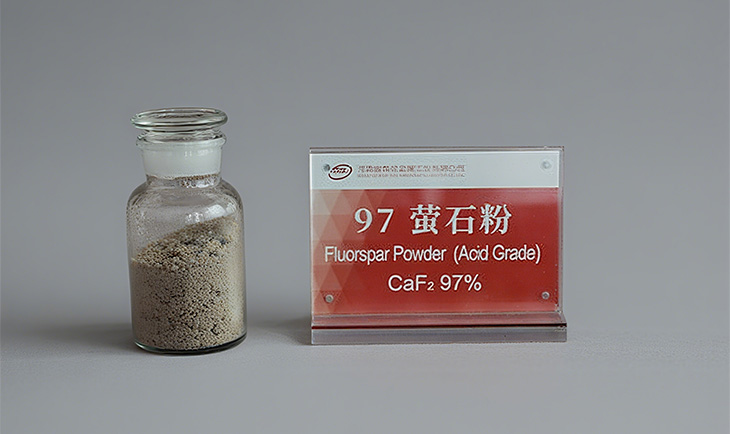
Eurofluor identifies acid-grade fluorspar at approximately 97% CaF₂ and notes that it is the main mineral feedstock for hydrofluoric acid production. After mining, impurities are removed before the material is supplied to HF plants.
Producing acid-grade material may involve ore selection, crushing, grinding and multistage flotation. U.S. EPA industry documentation describes ceramic- and acid-grade fluorspar being produced by multistage froth flotation, with middlings potentially reground and returned to cleaner circuits.
The cost behind an acid grade fluorspar price is therefore not simply the value of a higher CaF₂ percentage. It reflects how much feed ore and processing are required to produce one tonne that consistently meets the complete specification.
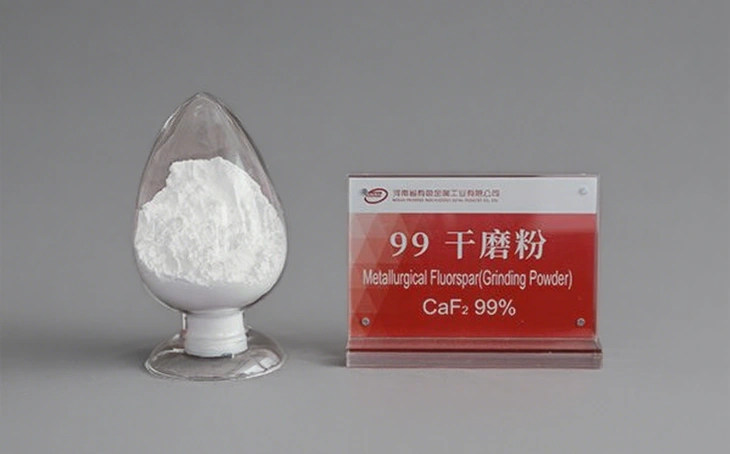
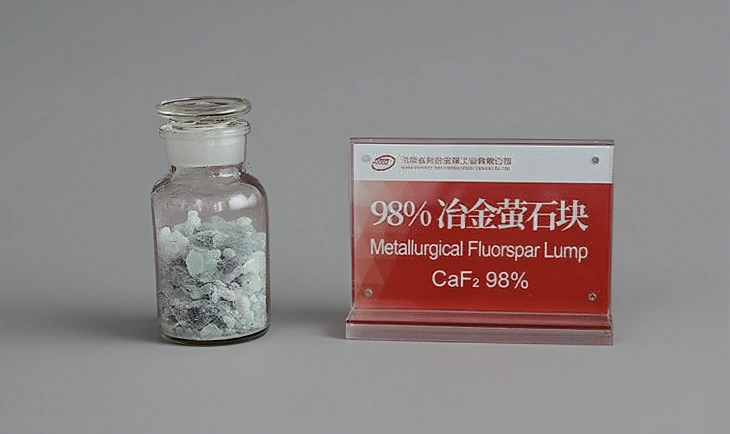
Metallurgical-grade fluorspar has a different commercial basis. CaF₂ remains important, but lump size, fines, moisture, physical stability and actual fluxing performance can also determine purchasing value.
This is why an acid-grade powder quotation and a metallurgical grade fluorspar price should not be placed in the same comparison simply because both are expressed in USD/MT.
2. How Do CaF₂, SiO₂, CaCO₃ and Moisture Translate into Cost?
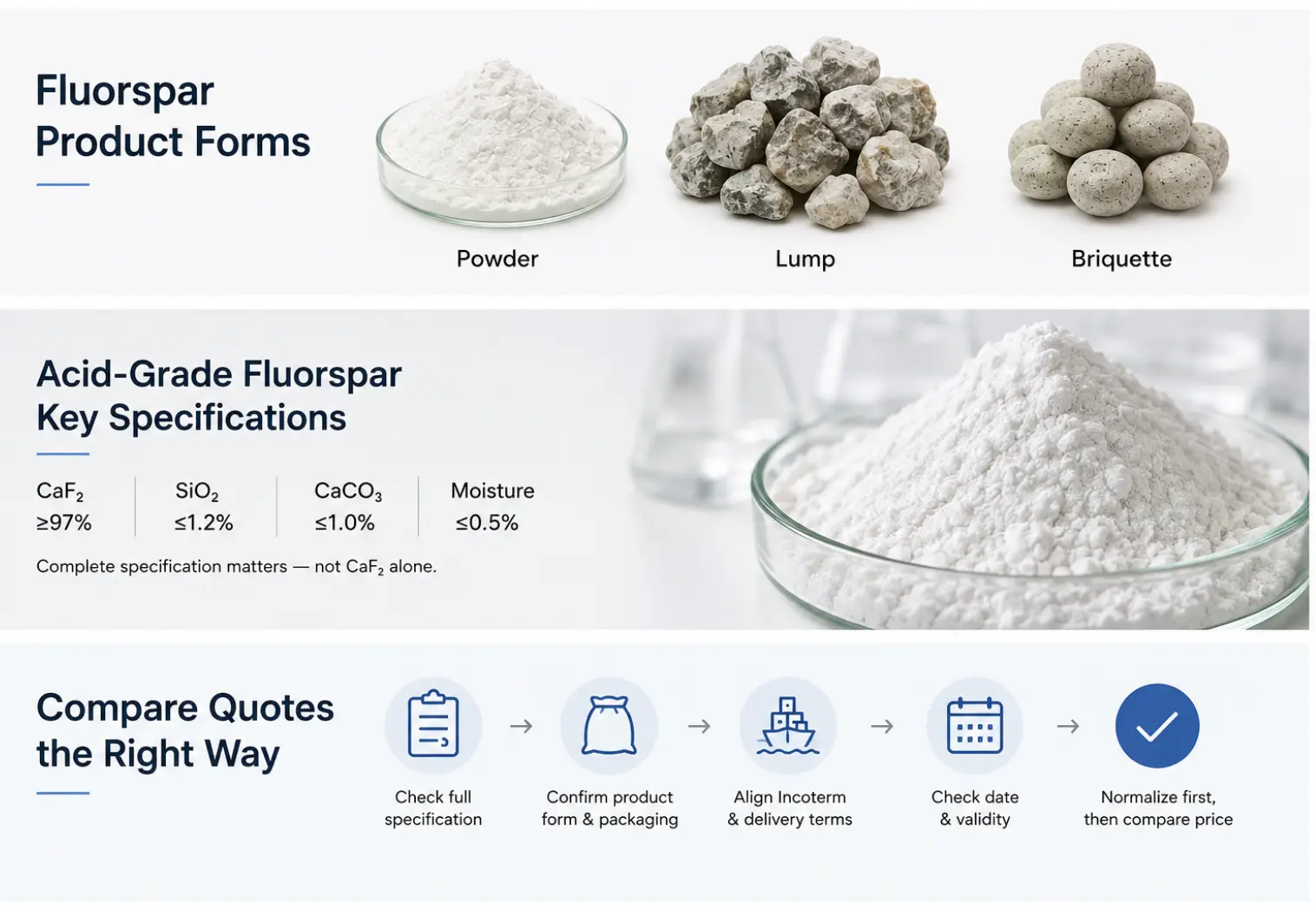
Specifications affect price because they influence both sides of the transaction:
the cost of producing material that meets the specification, and the value of that material when it enters the buyer’s process.
CaF₂: From Nominal Grade to Effective Mineral Cost
Higher target CaF₂ can require better feed ore, more effective beneficiation or additional cleaning, depending on ore mineralogy. More demanding separation can also affect the proportion of feed that becomes saleable concentrate.
For the producer, the relevant question is therefore:
How much feed and processing are required to produce one tonne that consistently meets the guaranteed specification?
For the buyer, the headline fluorspar price per ton is only one part of the calculation. CaF₂ content and moisture determine how much effective mineral is actually received in each tonne.
A lower-priced product with lower CaF₂ or higher moisture may not provide a lower cost per unit of usable CaF₂.
The opposite is also true: the highest available grade is not automatically the most economical choice. A specification materially above the process requirement can add procurement cost without generating an equivalent operating benefit.
SiO₂: More Than a Secondary COA Number
SiO₂ deserves particular attention in fluorspar used for HF production.
The industrial HF route is based on reacting acid-grade CaF₂ with sulfuric acid. U.S. EPA process documentation identifies silicon tetrafluoride (SiF₄) among the secondary gaseous products in commercial HF production, followed by downstream scrubbing and recovery.
For buyers, this means silicon-bearing impurities are relevant to downstream impurity management rather than being merely a cosmetic specification.
On the supply side, consistently lower SiO₂ can require more selective ore beneficiation. On the use side, higher or less stable silicon impurity levels can increase the burden on HF process control and purification.
Two products with the same guaranteed CaF₂ can therefore still represent different process value if their SiO₂ specifications and consistency differ.
CaCO₃: A Source of Non-Productive Acid Consumption
CaCO₃ affects HF feed economics through a different mechanism.
The target HF reaction consumes sulfuric acid to convert CaF₂ to HF. As a carbonate, CaCO₃ also reacts with acid. That portion of acid consumption does not contribute to the target conversion of CaF₂ into HF.
For an HF buyer, CaCO₃ is therefore not simply another purity figure. Higher CaCO₃ can mean additional non-productive acid demand and additional reaction-system load.
For the producer, maintaining a tighter CaCO₃ limit may require more selective feed or beneficiation control. This is another reason why two nominally similar acid-grade products may not justify the same price.
Moisture: Opposite Cost Effects for Producer and Buyer
Moisture creates a particularly clear cost trade-off.
For the producer:
lower moisture → additional drying and energy → tighter storage and moisture-control requirements.
For the buyer:
higher moisture → less mineral per delivered tonne → more non-mineral freight weight and potentially more storage or handling difficulty.
EPA documentation for HF production specifically describes dry fluorspar being fed to the process and separately identifies spar drying as an operating step.
This is why a slightly higher fluorspar powder price for controlled dry material does not automatically mean a higher effective raw-material cost.
When moisture differs materially, buyers should also confirm whether analytical values and commercial comparisons are being made on a dry basis, wet basis or as-received basis.
Example: A Complete Acid-Grade Quotation Basis
One specification basis previously used in HNNM acid-grade fluorspar business was:
| Specification | Requirement |
|---|---|
| CaF₂ | ≥97% |
| SiO₂ | ≤1.2% |
| CaCO₃ | ≤1.0% |
| H₂O | ≤0.5% |
| Fe₂O₃ | ≤0.5% |
| P | ≤0.05% |
| S | ≤0.05% |
| As | ≤0.0015% |
This is an example commercial specification, not a universal industry standard.
Its value is to show why a professional acid-grade quotation should be evaluated against the complete guaranteed specification rather than the CaF₂ figure alone.
[Internal link: Fluorspar Composition and CaF₂ Specification Guide]
3. Guaranteed Specification Is Not the Same as Typical Analysis
This distinction is important when comparing suppliers.
A recent COA may show:
CaF₂: 97.8%
while the contractual specification states:
CaF₂: ≥97.0%
The 97.8% result is an actual batch analysis. The ≥97.0% figure is the guaranteed delivery requirement.
Buyers should therefore compare quotations primarily on guaranteed specifications, not on the best individual COA available from each supplier.
Typical or historical analyses are still useful because they show how production has performed over time. But they should not be treated as a contractual guarantee.
One compliant batch also does not demonstrate long-term supply consistency. For continuous industrial operations, repeated control within the agreed specification is more meaningful than an unusually strong result from a single batch.
4. Powder, Lump and Briquette Have Different Cost Structures
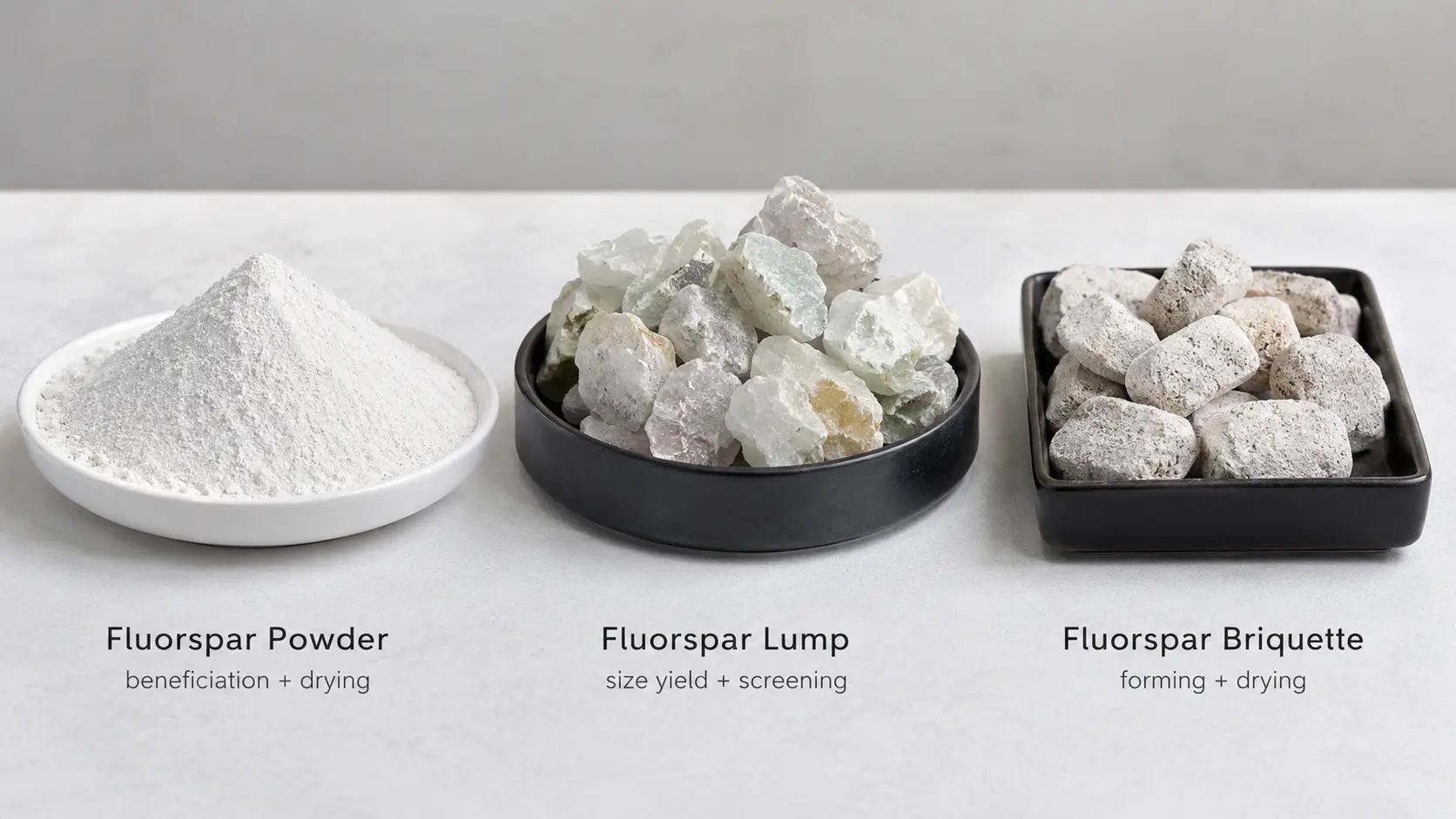
Product form changes both the processing route and saleable yield.
Fluorspar Powder
Powder may involve beneficiation, grinding, classification, screening and drying.
Its cost basis therefore includes:
raw-material grade + beneficiation + particle-size control + moisture control.
Acid-grade dry powder, wet concentrate and metallurgical-grade powder should not be treated as interchangeable products simply because they are all described as fluorspar powder.
Fluorspar Lump
For lump material, an important cost factor is the yield of material that falls within the customer’s required size range.
After crushing and screening:
- material within specification can be sold as the required lump grade;
- oversized material may require further processing;
- undersized material and fines may be diverted to other product streams.
A tighter lump-size specification can therefore affect more than screening cost—it can affect saleable product yield.
Buyers should also evaluate fines content, breakage and physical condition after transportation.
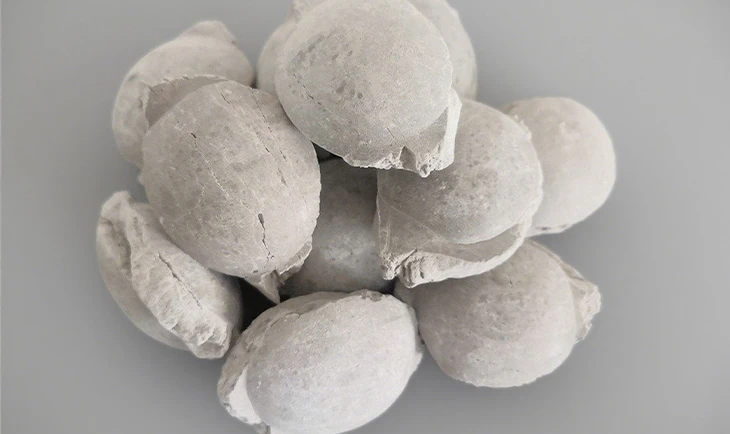
Fluorspar Briquette
Briquettes add a conversion stage to the raw-material cost.
Depending on the formulation and production route, this may include powder preparation, blending, binder addition, forming, drying, strength control and final screening.
The commercial logic is therefore:
Briquette price = feed-material basis + forming cost + finished-product quality control.
Buyers should confirm the final chemical composition, size, moisture, mechanical strength, fines generation and suitability for the intended metallurgical process.
5. Production Cost Sets the Base; the Market Sets the Negotiation Range
A tonne of compliant fluorspar can be viewed through four cost layers:
| Cost Layer | Main Components |
|---|---|
| Feed cost | Ore source, feed grade and raw-material consistency |
| Processing cost | Crushing, grinding, flotation, drying, screening or briquetting |
| Quality cost | Impurity control, laboratory testing and batch management |
| Supply-chain cost | Inventory, production planning and supply coordination |
These costs explain the supplier’s underlying cost position.
Market references answer a different question: what price range can the market support today?
Market pricing can move with fluorspar availability, inventory, HF and metallurgical demand, regional supply-demand balance, major market quotations, exchange rates and other short-term commercial conditions. USGS continues to track fluorspar production, consumption, trade and supply data, reflecting its role as a globally traded industrial mineral.
The distinction is important:
Production cost sets the cost base; market balance sets the short-term negotiation range.
An industry price assessment or major producer quotation is therefore a market reference, not a production-cost component.
6. Packaging, Incoterms and Quotation Validity Define the Price Boundary
Packaging and logistics affect the final quoted number, but they should be separated from the intrinsic product-cost discussion.
A common HNNM export arrangement is:
jumbo bags + pallets + container shipment.
FOB, CIF or another agreed Incoterm can be used according to the customer’s requirement.
For example, an FOB loading-port quotation and a CIF destination-port quotation may show different USD/MT values even when the underlying product is identical.
Before comparing offers, buyers should align:
- packaging and net weight;
- palletization;
- container loading;
- loading port;
- destination port;
- Incoterm;
- quotation date;
- quotation validity.
HNNM export quotations are commonly valid for around 5–7 days, subject to market conditions, inventory, exchange rates and shipment arrangements.
The validity period is effectively the time window during which the commercial assumptions behind the quote remain open for acceptance.
7. How Should Buyers Normalize Two Fluorspar Quotations?
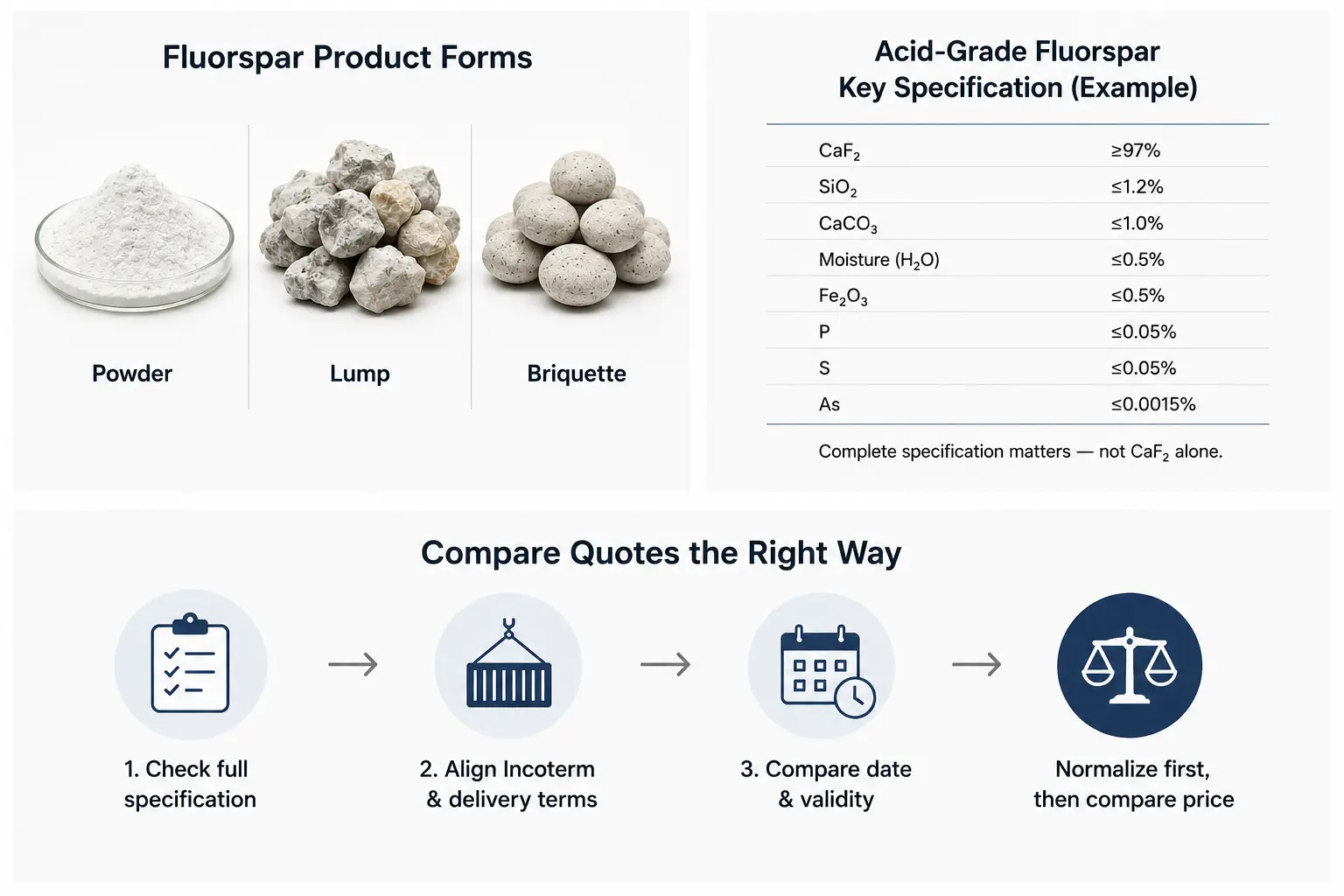
The most useful comparison begins before looking at the final USD/MT.
| Comparison Item | Quote A | Quote B |
|---|---|---|
| Grade | Acid Grade | Acid Grade |
| Guaranteed CaF₂ | ≥97% | ≥97% |
| Typical CaF₂ | 97.6% | 97.9% |
| SiO₂ Limit | Confirmed | ? |
| CaCO₃ Limit | Confirmed | ? |
| Moisture | Confirmed | ? |
| Analytical Basis | Dry / As Received | ? |
| Particle Size | Confirmed | ? |
| Product Form | Dry Powder | Wet / Dry? |
| Packaging | Jumbo Bag + Pallet | ? |
| Incoterm | FOB | CIF |
| Loading / Destination | Confirmed | ? |
| Quotation Date | Confirmed | Confirmed |
| Validity | 7 Days | ? |
| COA / SDS / TDS | Available | ? |
The objective is not simply to complete the table. It is to identify which variables have not yet been defined.
Until grade, guaranteed specification, moisture basis, product form, quotation date, and delivery boundary are aligned, two fluorspar price per tonne figures are not fully comparable.
A useful RFQ should therefore specify the application, grade, guaranteed CaF₂, impurity limits, moisture, particle size, product form, quantity, packaging, Incoterm, destination port and required documents.
Request a Fluorspar Quote from HNNM
HNNM can coordinate stable supply of acid-grade fluorspar powder, metallurgical-grade powder, fluorspar lump and briquettes according to buyer specifications.
COA, SDS and TDS can be provided according to product and order requirements. Typical export arrangements include jumbo bags on pallets and container shipment, with FOB, CIF or other agreed trade terms available according to the destination and transaction requirements.
As a subsidiary of Duofuduo New Materials Co., Ltd., HNNM supports overseas industrial buyers with specification coordination, quality documentation, export arrangements and long-term supply communication.
Our objective is not simply to provide another fluorspar price per ton, but to provide a quote in which the specification, quality documents, price basis and delivery conditions are clearly aligned.
[Internal link: Request a Fluorspar Quotation / Contact HNNM]
FAQ
Why can two suppliers quote different prices for 97% CaF₂ fluorspar?
Because CaF₂ is only one part of the specification. SiO₂, CaCO₃, moisture, particle size, beneficiation requirements, analytical basis and batch consistency can differ even when the guaranteed CaF₂ is the same.
What is the difference between guaranteed specification and typical analysis?
A guaranteed specification defines the contractual delivery limit. Typical analysis describes normal or historical production performance. Buyers should use the guaranteed specification as the primary basis for commercial comparison.
Should fluorspar price be compared on a wet or dry basis?
The moisture and analytical basis should be confirmed first. Dry powder and wet material can contain different quantities of effective mineral per delivered tonne, so their unit prices should not be compared without adjusting the basis.
Is higher CaF₂ always worth paying a higher price?
No. The economically appropriate grade is the grade that consistently meets the downstream process requirement. Purchasing materially above that requirement can increase raw-material cost without delivering an equivalent process benefit.
What documents should a buyer review before confirming a fluorspar order?
Buyers should review the agreed specification and a recent COA, and request the applicable SDS and TDS. Packaging, Incoterm, quotation validity, lead time and required commercial or export documents should also be confirmed before purchase.
Conclusion: Normalize the Price Basis Before Deciding Which Offer Is Cheaper
A fluorspar quotation ultimately needs to answer three questions:
What does it cost to produce material that consistently meets the required specification?
What usable value does that specification deliver in the buyer’s process?
What price can the current market and delivery basis support?
CaF₂, SiO₂, CaCO₃, moisture and particle size are not isolated laboratory numbers. They can affect beneficiation requirements, saleable yield, drying, acid consumption, effective delivered mineral and process consistency.
Powder, lump and briquette are also more than different physical forms; they represent different processing routes and cost structures.
Market references help define the short-term negotiation range, but they should not be confused with production cost. Packaging, port and Incoterms define the commercial boundary rather than the intrinsic quality value of the fluorspar.
For an industrial buyer, the most meaningful fluorspar price comparison therefore begins by normalizing:
Grade + Guaranteed Specification + Moisture Basis + Product Form + Quotation Date + Incoterm
Only then does the final USD/MT answer the question that matters:
What is the real cost of each tonne of consistent, compliant and usable fluorspar?