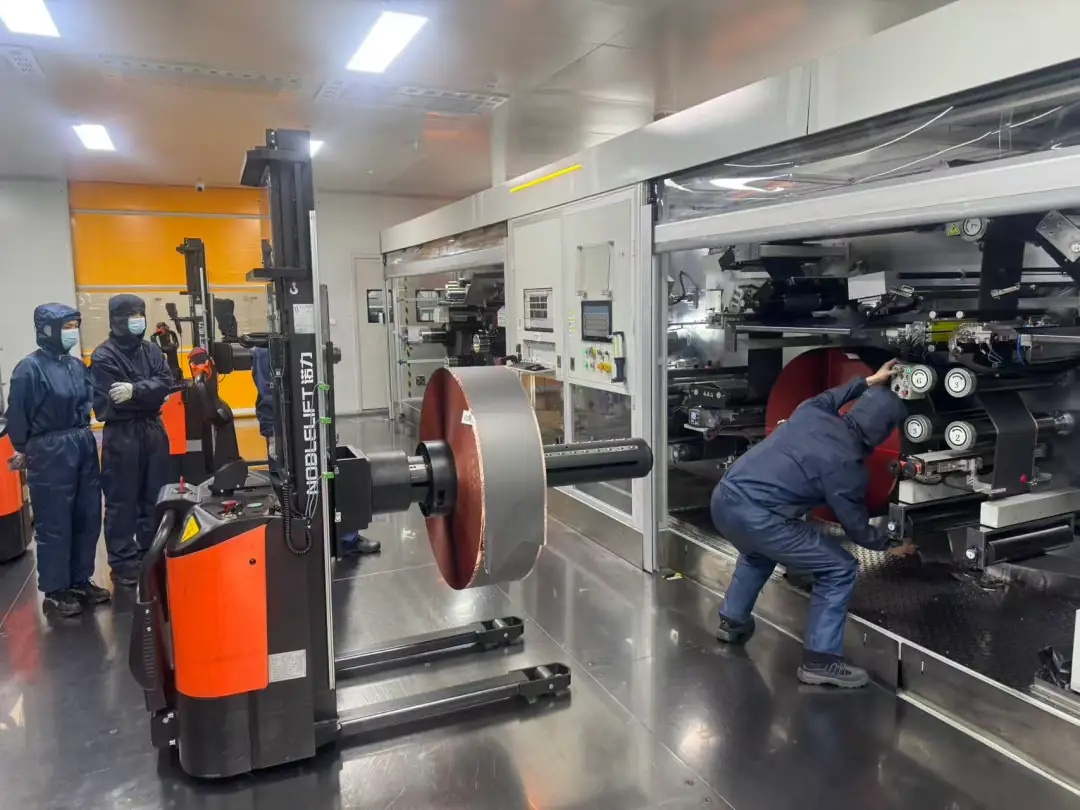
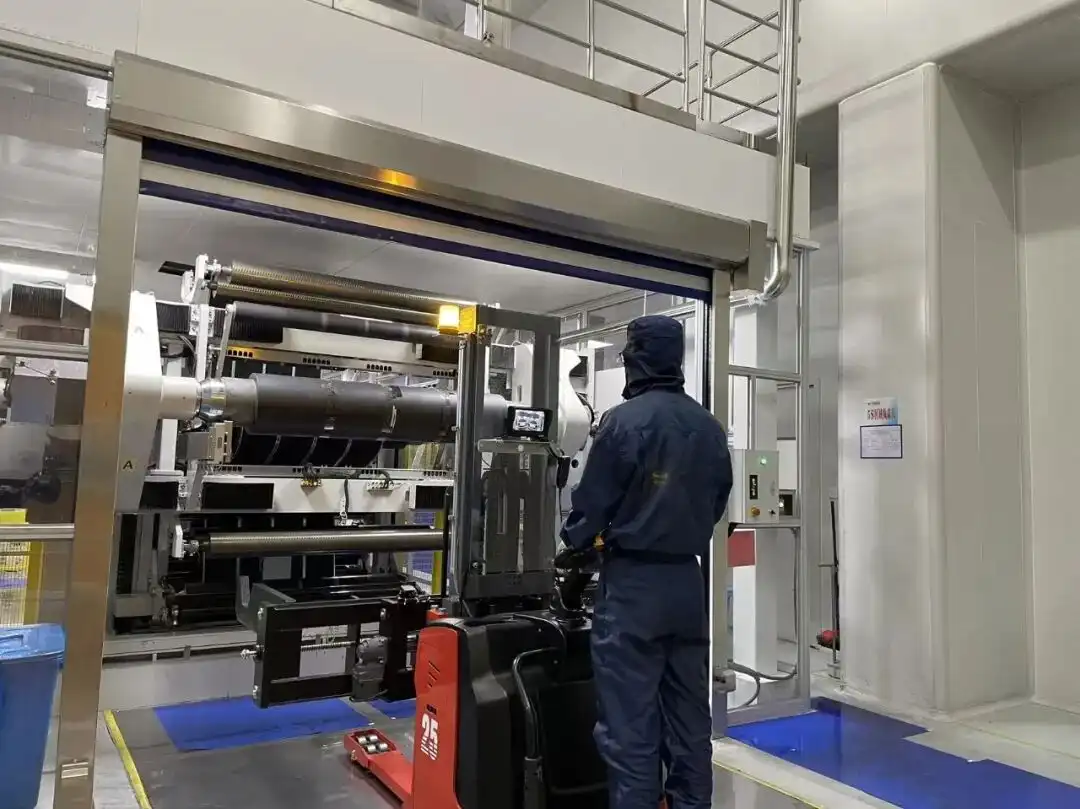
On April 1, the New Energy Production Department organized a forklift skills competition focused on material loading and unloading operations. Frontline forklift operators from coating, calendering and slitting, and secondary slitting processes took part in the event.
Built around real production scenarios, the competition evaluated employees’ overall capabilities in forklift operation, safety compliance, and abnormal situation handling. The goal was to further improve standardized on-site operations and support stable, efficient workshop performance.
Practical Assessment Designed Around Daily Production Needs
Assessment Covered Both Theory and Practical Operation
The competition focused on high-frequency tasks such as material handling and inter-process transfer. Assessment items covered forklift structure and operating principles, routine maintenance, safety procedures, emergency fault handling, and operating standards between process sections.
In addition to theoretical knowledge, participants were also evaluated on operational stability, precision, work efficiency, and attention to safety details. This made the assessment closely aligned with actual production requirements.
Frontline Skills Directly Affect Production Stability
For manufacturing operations, frontline execution directly affects material flow, process coordination, and production rhythm. Continuous skills training helps reduce operating deviations and workflow fluctuations, improving overall production stability.
Standardized Operations Support Safe Production and Efficient Execution
Real Working Conditions Improved the Relevance of the Competition
A key feature of the competition was its close connection with real working conditions. The assessment was based on routine loading, unloading, and transfer tasks, making it possible to more accurately reflect employees’ practical operating ability.
The event also helped identify weak points in daily execution and operating details. Through competition-based training and targeted improvement, the workshop further reinforced safety requirements and standardized operating procedures at the job level.
Standardized Execution Supports Quality and Delivery
For customers, disciplined on-site management means more than workplace safety. It also supports a more stable production process and a more controllable delivery schedule.
Reliable execution on the production floor is an important foundation for consistent product quality and on-time order fulfillment.
Ongoing Investment in Frontline Capability Supports Stable Delivery
Practical Training Strengthens On-Site Management
The forklift skills competition is part of the company’s ongoing efforts to strengthen workforce capability and improve on-site management. Regular practical training helps enhance employees’ operating skills, safety awareness, and process discipline, while reducing non-standard practices in daily work.
Professional Operations Management Builds Customer Confidence
For industrial customers, supplier evaluation is not limited to product specifications alone. Production organization, on-site management, and delivery reliability are also important factors in long-term cooperation.