Understanding fluorspar composition is the starting point for any industrial procurement decision. Fluorspar — commercially synonymous with the mineral fluorite — has calcium fluoride (CaF₂) as its primary chemical component, with a CAS number of 7789-75-5, a molecular weight of 78.07 g/mol, and a density of approximately 3.18 g/mL. However, natural ore deposits rarely yield pure CaF₂. Commercially traded fluorspar contains CaF₂ ranging from 65% to above 97%, alongside a range of gangue minerals and impurities that directly affect downstream process compatibility.
This guide examines the chemical composition of fluorspar across industrial grades, explains what each impurity means for your specific application, and provides a practical framework for matching product specifications to process requirements.
What Is the Chemical Composition of Fluorspar?
CaF₂ Is the Defining Component
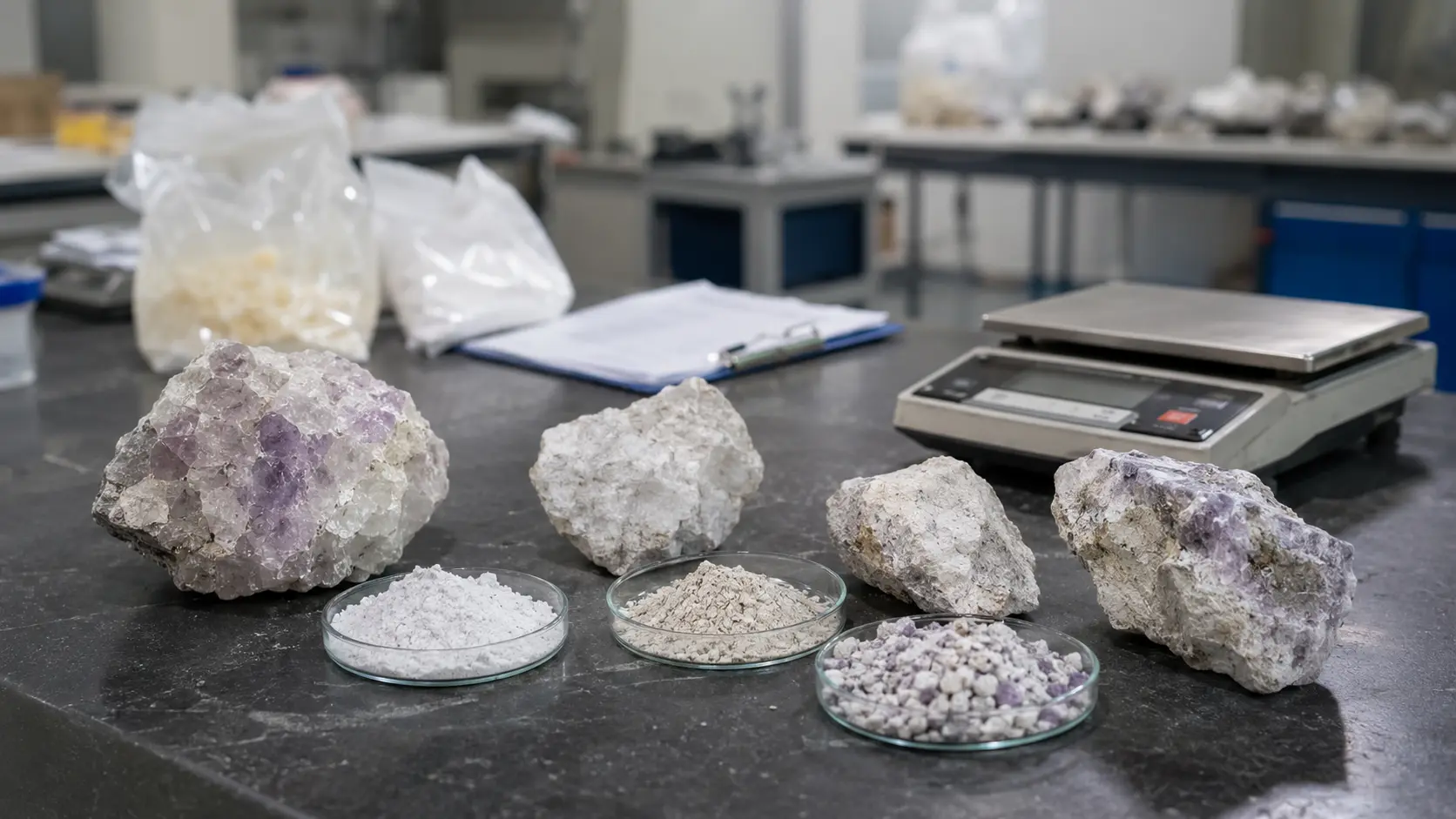
The composition of fluorspar is built around calcium fluoride (CaF₂) as the primary mineral phase. In terms of industrial value, CaF₂ content determines grade classification and serves as the baseline for pricing and procurement. It is the source of reactive fluorine in hydrofluoric acid (HF) manufacturing and the flux agent responsible for lowering slag melting points in metallurgical applications.
Commercial Fluorspar Is Not Pure Calcium Fluoride
Natural fluorspar ore is formed in association with a range of co-occurring minerals. As a result, the fluorspar chemical composition of any commercially traded product reflects both the CaF₂ content and the specific impurity profile of the deposit. The British Geological Survey identifies silica, carbonates, and sulfides as the principal unfavorable impurities in fluorspar, a characterization consistent with the operational experience of HF producers and steel mills worldwide.
Four key impurities define process compatibility:
- SiO₂ (silica): In acid-grade applications, SiO₂ reacts with sulfuric acid to form silicon tetrafluoride (SiF₄), a gaseous byproduct that reduces HF yield and complicates off-gas handling. For metallurgical applications, elevated SiO₂ alters slag chemistry and can affect refining outcomes. Even among products with nominally identical CaF₂ content — for example, two batches both reporting 78% CaF₂ — a difference of 3% versus 9% SiO₂ produces measurably different slag behavior in a converter furnace.
- CaCO₃ (calcite): A common gangue mineral that increases the proportion of non-reactive material and consumes additional sulfuric acid in HF production. In metallurgical furnaces, calcite decomposition generates CO₂, introducing minor but process-relevant gas evolution into the charge.
- BaSO₄ (barite): Chemically stable under most process conditions, BaSO₄ does not participate in HF reactions. Its significance is twofold: it forms inert deposits within the reactor system that reduce effective reaction volume and process efficiency, and its elevated presence is generally a signal of lower ore quality and inconsistent mineralogy — a proxy indicator for batch instability. Procurement teams evaluating acid-grade fluorspar should treat BaSO₄ as a required line item on COA review, not an optional check.
- S and P (sulfur and phosphorus): For steelmaking applications, both elements counteract the process objective. Fluorspar is introduced into the furnace specifically to assist desulfurization and dephosphorization of the melt. Incoming S and P load from the fluorspar itself directly undermines that function and must be controlled according to the steel grade being produced.
How CaF₂ Content and Impurities Define Industrial Grades
Acid-Grade Fluorspar Powder: The Standard for HF Manufacturing
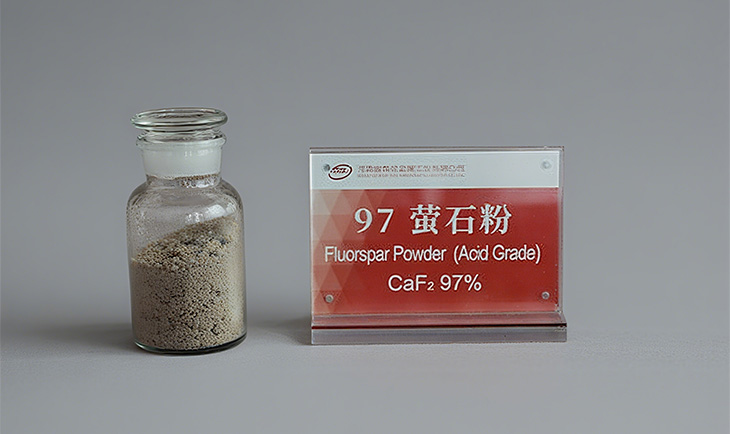
Acid-grade fluorspar powder requires CaF₂ ≥ 97% and is the highest-purity commercial product in the fluorspar market. Its primary application is the manufacture of hydrofluoric acid via reaction with concentrated sulfuric acid — the foundational feedstock for the broader fluorochemical industry.
The 97% CaF₂ threshold is process-derived, not arbitrary. When CaF₂ content falls short, the proportion of reactive impurities — particularly SiO₂ — increases correspondingly. This raises the rate of competing reactions, reduces HF yield, and increases the burden on downstream purification. Industry practice typically requires SiO₂ ≤ 1.0% for standard acid-grade material, with more demanding customers specifying ≤ 0.5%. BaSO₄, S, and P limits are similarly tight and should be explicitly confirmed in the contract specification.
Beyond single-batch compliance, batch-to-batch stability is equally critical for continuous HF production. Procurement contracts for acid-grade material frequently define not only minimum CaF₂ values but also acceptable variation ranges — typically ±0.5% across consecutive shipments — to protect production consistency.
Metallurgical-Grade Fluorspar Lump: Direct Charge for Blast Furnaces
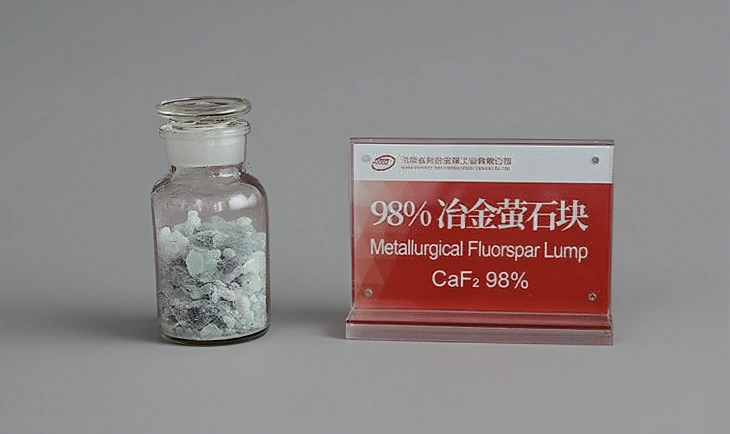
Metallurgical-grade fluorspar lump, with CaF₂ content typically in the range of 65–85%, is processed directly from run-of-mine ore through crushing and sizing. It is used as a fluxing agent in blast furnaces and older-type smelting furnaces, where it lowers slag melting temperature and improves slag fluidity to facilitate tapping.
Lump material requires no further processing before charging, which simplifies logistics for operations using conventional furnace designs. Selection criteria focus on CaF₂ content relative to slag chemistry targets, lump size compatibility with the charge opening, and S/P levels consistent with the steel or iron grade being produced.
Fluorspar Balls: The Standard Feed Form for Modern Steelmaking
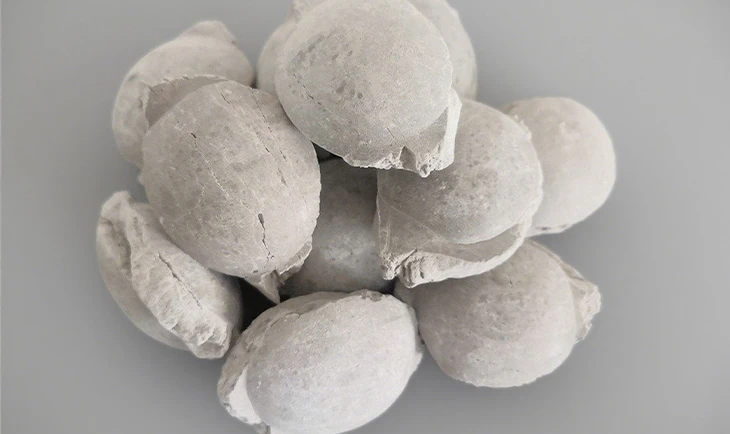
Fluorspar balls are manufactured by pressing metallurgical-grade fluorspar powder with a binder — typically bentonite or a cement-based system — into uniform-diameter spheres meeting the physical specifications of modern BOF converters and ladle furnaces.
Direct addition of loose powder to these furnaces is not operationally viable: fine material generates significant dust losses before it reaches the slag, reducing effective utilization and creating fugitive emission issues. Balled material eliminates these problems, delivering a consistent composition directly into the slag-forming zone. Buyers specifying fluorspar balls should confirm ball diameter, compressive strength, and binder type — the last point matters for high-cleanliness steel grades where binder-derived impurities can become relevant.
Metallurgical-Grade Fluorspar Powder: Feedstock and Niche Direct Applications
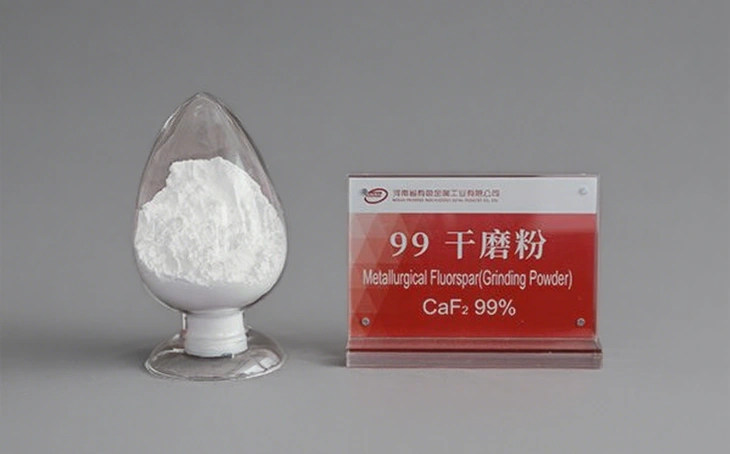
Metallurgical-grade fluorspar powder (CaF₂ 65–85%) below acid-grade purity follows two main commercial pathways. The primary route is further processing into fluorspar balls as described above. Secondary direct-use applications include ladle slag conditioners, mold flux formulations for continuous casting, non-ferrous smelting auxiliaries, and glass and ceramic batch compositions — each with its own compositional and granulometric requirements.
From CaF₂ Content to Procurement Specification: A Practical Framework
Do Not Compare CaF₂ Numbers in Isolation
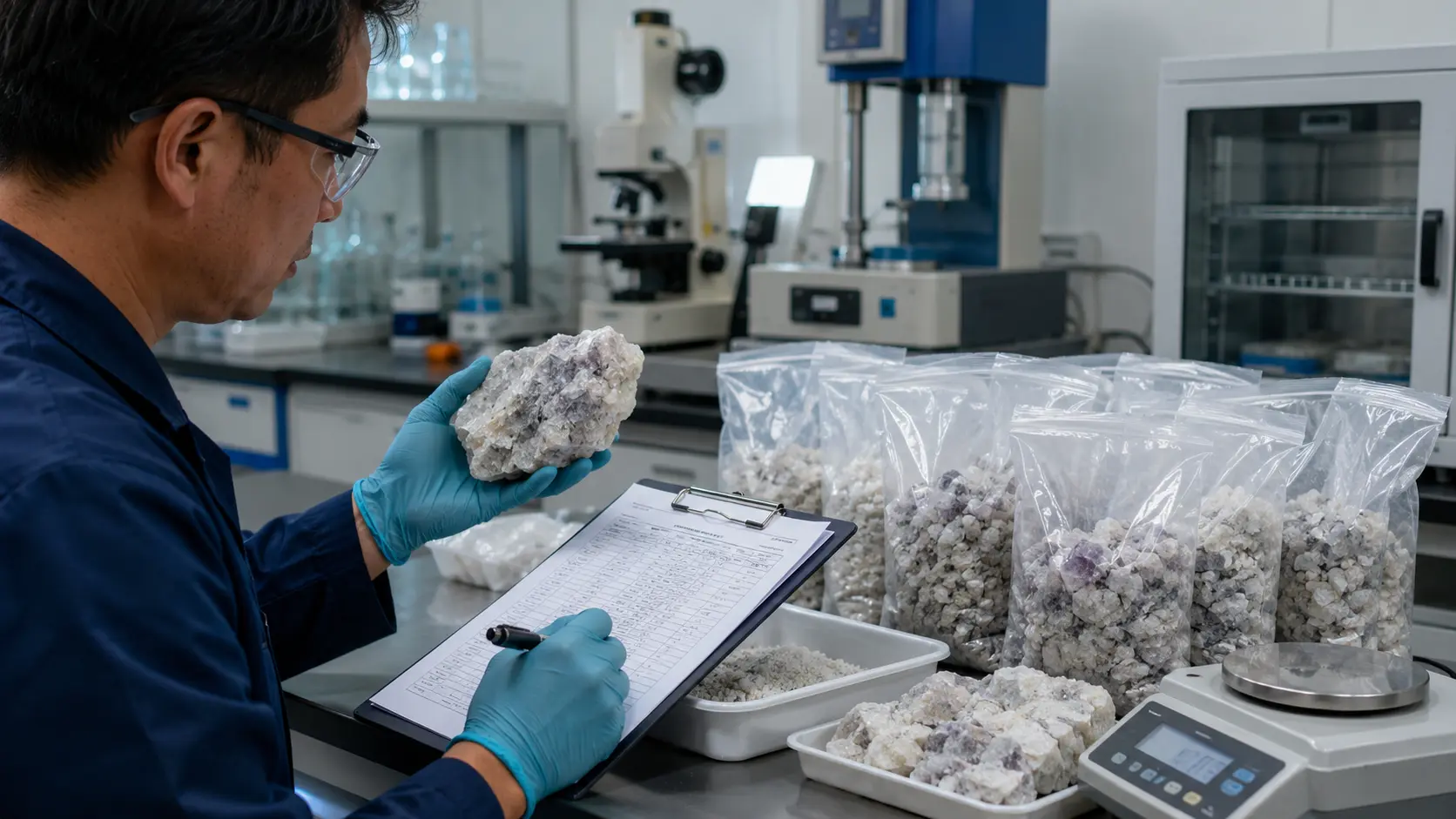
A COA reporting CaF₂ content is a starting point, not a complete specification. Two products with identical CaF₂ values can perform very differently in the same process if their impurity profiles diverge. Effective specification review covers:
| Parameter | Acid-Grade Priority | Metallurgical Priority |
|---|---|---|
| CaF₂ | ≥ 97%, batch stability ±0.5% | 65–85%, per slag system requirement |
| SiO₂ | ≤ 1.0% (≤ 0.5% for demanding users) | Process-dependent |
| BaSO₄ | Mandatory line item | Secondary |
| S / P | Strict upper limits | Steel-grade dependent |
| H₂O | Dry-basis CaF₂ reconciliation | Affects utilization rate |
| Particle size | Per plant feed specification | Ball diameter/lump sizing |
Moisture and the Dry-Basis Calculation
Moisture content is a routinely overlooked variable with direct pricing implications. Fluorspar is typically priced on a dry-basis CaF₂ content. When as-received moisture exceeds the contracted level, the effective CaF₂ delivered per wet tonne is reduced. Reconciliation against dry-basis specifications should be standard practice at goods receipt.
Test Method Alignment Prevents Disputes
XRF (X-ray fluorescence) is the standard tool for rapid supplier quality control. Wet chemistry titration is more time-intensive but yields higher precision and is the conventional basis for dispute resolution. The two methods routinely produce CaF₂ readings that differ by 0.3–0.5 percentage points — a gap that is commercially significant for acid-grade procurement. Contracts should specify the agreed test method and a recognized third-party laboratory for arbitration.
Batch Stability as a Procurement Criterion
For continuous-process buyers — HF plants in particular — single-sample COA compliance is insufficient. Requesting COA data from multiple recent production batches and mapping the variance of key parameters is a more reliable predictor of supply suitability than any single certificate. Suppliers unable to demonstrate consistent batch data present a procurement risk irrespective of their headline CaF₂ number.
Grade Selection by Application: A Decision Summary
HF manufacturing → Acid-grade fluorspar powder, CaF₂ ≥ 97%. Prioritize SiO₂ ≤ 1.0%, confirmed BaSO₄ and S/P limits, and documented batch stability. This is a non-negotiable specification environment.
Blast furnaces and conventional smelting → Metallurgical-grade lump, CaF₂ 65–85%. Confirm lump sizing, S/P levels, and CaF₂ adequacy for the target slag system.
Modern BOF converters and ladle furnaces → Fluorspar balls. Confirm ball diameter, compressive strength, binder type, and CaF₂ content per plant specification.
Ball pressing, mold flux, or specialty blending → Metallurgical-grade fluorspar powder. Confirm CaF₂ range, particle size distribution (D50/D90), moisture, and impurity profile per end-use requirement.
Conclusion: Fluorspar Composition Is a Process Compatibility Question
The chemical composition of fluorspar — CaF₂ content, impurity profile, physical form, and batch consistency — must be evaluated as a matched set against process requirements, not as isolated numbers on a price sheet. Acid-grade applications demand precision at every specification parameter. Metallurgical applications offer more flexibility on purity but impose their own constraints on physical form, impurity balance, and delivery consistency.
Procurement teams that build specification review into their sourcing process — rather than defaulting to CaF₂ content as a single proxy — are better positioned to avoid substitution failures, reduce process variability, and negotiate supply contracts on a defensible technical basis.
FAQ
Is CaF₂ the same as fluorspar?
CaF₂ (calcium fluoride) is the primary mineral compound in fluorspar, but the two terms are not interchangeable in commercial contexts. Pure CaF₂ is a laboratory or high-purity industrial chemical. Fluorspar refers to the mined and processed mineral commodity, which contains CaF₂ as its main component alongside varying levels of gangue minerals and impurities. The CaF₂ content of commercial fluorspar ranges from approximately 65% to over 97%, depending on grade.
What is the minimum CaF₂ content required for steelmaking?
There is no single universal minimum, as the requirement depends on furnace type, slag system design, and the steel grade being produced. As a general reference, metallurgical-grade fluorspar for steelmaking typically specifies CaF₂ in the range of 65–85%. Modern BOF and ladle furnace operations almost universally require ball or briquette form rather than loose powder, regardless of CaF₂ content. Your process metallurgist or slag chemistry specification should be the authoritative source for your minimum.
Can metallurgical-grade fluorspar be upgraded to acid grade?
Yes, through flotation beneficiation. Run-of-mine ore with sufficient CaF₂ potential can be processed by froth flotation to produce acid-grade concentrates meeting ≥ 97% CaF₂. The economic feasibility depends on the ore head grade, mineralogy, and local processing costs. Not all metallurgical-grade commercial products originate from ore suitable for acid-grade beneficiation — some deposits carry impurity types that persist through flotation.
Why does BaSO₄ matter so much in acid-grade fluorspar?
BaSO₄ (barite) is chemically inert in the HF reaction environment and does not react with sulfuric acid under standard process conditions. Its impact is operational: it accumulates as an inert deposit within the reactor system, reducing active reaction volume and process throughput over time. Beyond the direct process effect, a consistently elevated BaSO₄ level is often symptomatic of inconsistent ore blending or lower-quality feedstock — making it a useful signal for procurement teams assessing supplier reliability.
What should I request from a supplier before placing a first order?
At minimum: COA data from at least three recent production batches covering CaF₂, SiO₂, CaCO₃, BaSO₄, S, P, H₂O, and particle size or physical form specifications. Confirm the test method used (XRF or wet chemistry) and whether the supplier can support third-party verification. For acid-grade procurement, also request information on batch-to-batch CaF₂ variance and the supplier’s internal quality control frequency.
Henan Non-Ferrous Metals Industry Co., Ltd. is an authorized trading subsidiary of Duofluoride Chemicals Co., Ltd. (Shenzhen Stock Exchange: 002407), a globally recognized fluorspar and fluorochemical manufacturer. Our product range covers acid-grade fluorspar powder, metallurgical-grade lump, fluorspar balls, and metallurgical-grade powder, supplied to HF producers, steel mills, and industrial processors across multiple markets. For specifications, samples, or supply inquiries, contact us at: [email protected]